OpenAI has launched new education plugins for ChatGPT Work and Codex, aimed at K-12 teachers, college educators, and students.
The OpenAI RSS feed lists the August 4 product update as “New ways to learn and teach with ChatGPT Work and Codex.” Its description says the plugins are meant to help users learn, teach, research, and build. The linked article page was reachable as a URL but returned a browser challenge in this run, so this article uses the RSS entry for the narrow launch facts.
That still gives a clear product signal. OpenAI is packaging education workflows around ChatGPT Work and Codex instead of treating classroom AI use as a collection of loose prompts.
Education AI is becoming managed workflow software
Schools and universities already face the hard part of AI adoption: policy, permissions, assignment design, accessibility, academic integrity, student privacy, and teacher workload. A generic chatbot interface does not solve those problems by itself.
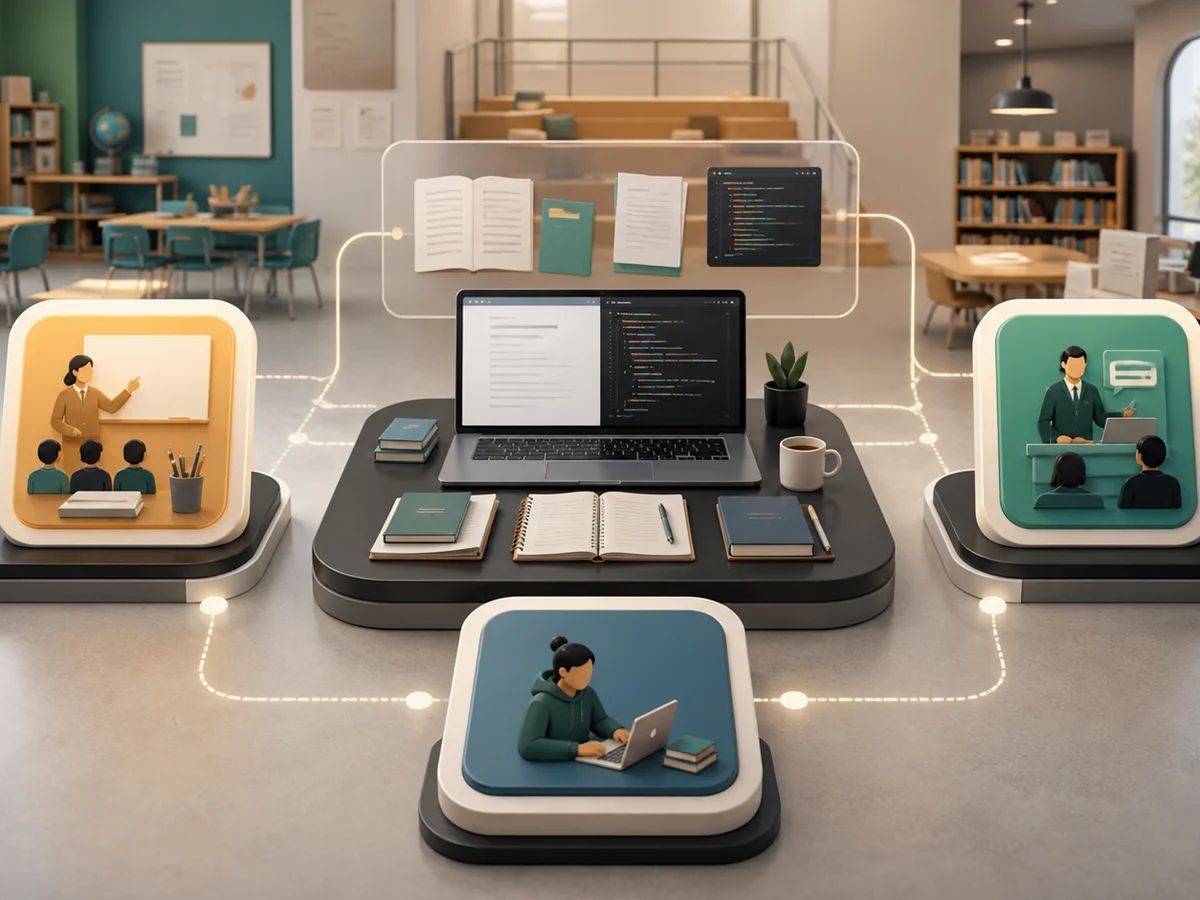
Plugins are a different packaging move. They can combine instructions, files, tools, and repeatable workflows for a role. A teacher may need lesson planning, rubric drafting, differentiation, parent communication, and classroom material adaptation. A college instructor may need research support, course material review, and code examples. A student may need tutoring, study planning, research organization, and project help.
Codex matters in that mix because education use is no longer only essay feedback or lesson summaries. Students and instructors increasingly use AI inside computational assignments, data analysis, software projects, research prototypes, and lab workflows.
The risk is institutional fit
OpenAI’s announcement says the plugins are for ChatGPT Work and Codex, but the deployment detail is what schools should check before adoption. Education buyers need to know which plans support the plugins, how administrators enable them, what data controls apply, and whether a district or campus can decide which workflows are available to which users.
The article should also be read against OpenAI’s earlier education direction. The company has already published customer and access stories around AI in learning environments. This update is narrower: it packages practical learning and teaching workflows into managed product surfaces.