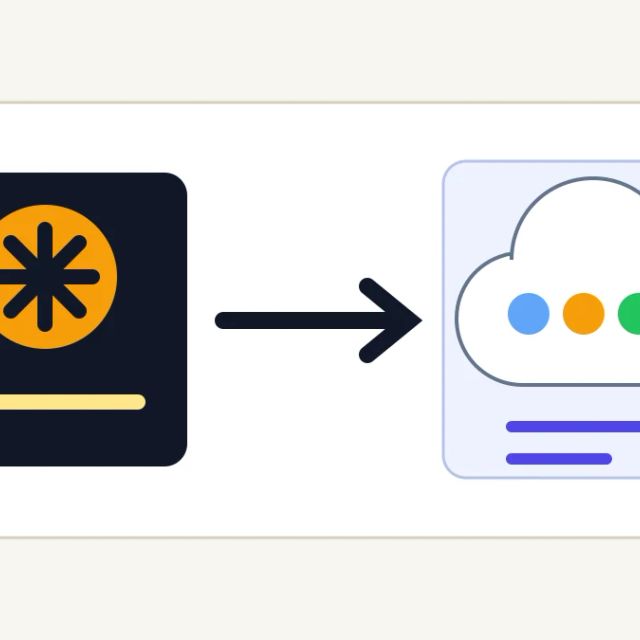
SpaceX is moving forward with a $60 billion acquisition of Cursor, according to AP reporting published June 16, 2026. AP says SpaceX disclosed in a Tuesday regulatory filing that Cursor will become a wholly owned subsidiary when the deal closes in the third quarter.
The number is large enough to be the headline, but the strategic point is narrower. Cursor is not only a popular AI coding tool. It is a daily developer workflow, a model-training customer, and a distribution surface for coding agents. If the deal closes as reported, Elon Musk’s AI orbit gains a direct path into the software teams that already use assistants as part of their build loop.
The acquisition follows a compute partnership
Cursor had already explained why SpaceX mattered. In an April 21 post, the company said its model progress had been constrained by compute and that the SpaceX partnership would let it use xAI’s Colossus infrastructure to scale training.
That is the important context for the reported acquisition. Coding agents are not just editors with autocomplete anymore. They run longer tasks, plan changes, call tools, read repositories, write files, and iterate after tests fail. Better models help, but so does the ability to train and serve them at scale.
Cursor’s own description makes the compute link explicit. It says each step up in compute translated to more capable models, from its first agentic coding model through Composer 1.5 and Composer 2. The acquisition would turn that dependency from a partnership into an ownership structure, if the deal closes as AP describes.
This is about workflow control
The coding-agent market is becoming a contest for where developers spend the day. OpenAI has Codex. Anthropic has Claude Code. xAI has Grok Build and a growing developer-tool surface. Cursor sits in a different position: it is the workspace where developers can route work across multiple models.
That makes it strategically useful. A model provider can win benchmark attention and still lose the daily workflow if developers prefer another tool. A coding environment can observe which tasks users delegate, where agents fail, which model families they trust, and what kinds of work actually convert into shipped code.
The AI Feed’s read is that this is the acquisition logic. SpaceX is not only buying a product; it is buying proximity to developer intent. That proximity can shape model training, product distribution, and enterprise adoption in a way a standalone API endpoint cannot.
Cursor’s model neutrality is now the thing to watch
Cursor’s current product surface still presents itself as a place to use multiple frontier models. Its homepage names Composer 2.5 alongside GPT-5.5, Claude Opus 4.8, Gemini 3.1 Pro, and Grok 4.3.
That mix is a feature, not a footnote. Developers often choose Cursor because it lets them switch models for different tasks. If the acquisition pushes Cursor too hard toward one model family, it risks weakening the workflow advantage SpaceX would be buying.
The more likely near-term tension is subtler. Cursor can remain multi-model while giving xAI models deeper integration, better latency, more agent-specific affordances, or privileged training loops. None of that is confirmed in AP’s report or Cursor’s April post. It is the practical question customers should watch after closing.
The price says coding agents are infrastructure
A $60 billion price tag treats the coding-agent layer as strategic infrastructure. That is a different valuation story from “AI editor grows quickly.” It implies that the interface between developer intent and model execution may be as valuable as the model call itself.
For buyers and engineering leaders, the near-term action is not to panic-migrate tools. It is to map dependency. Which teams rely on Cursor? Which models do they use inside it? Are prompts, rules, repository context, or workflow automations tied to one vendor surface? Who owns fallback if pricing, model defaults, enterprise controls, or data terms change after the deal closes?
The answer may still be “keep using it.” Cursor could get more compute, better models, and deeper agent features from the relationship. But the ownership change, if completed, would make model choice, developer workflow, and AI infrastructure harder to separate.