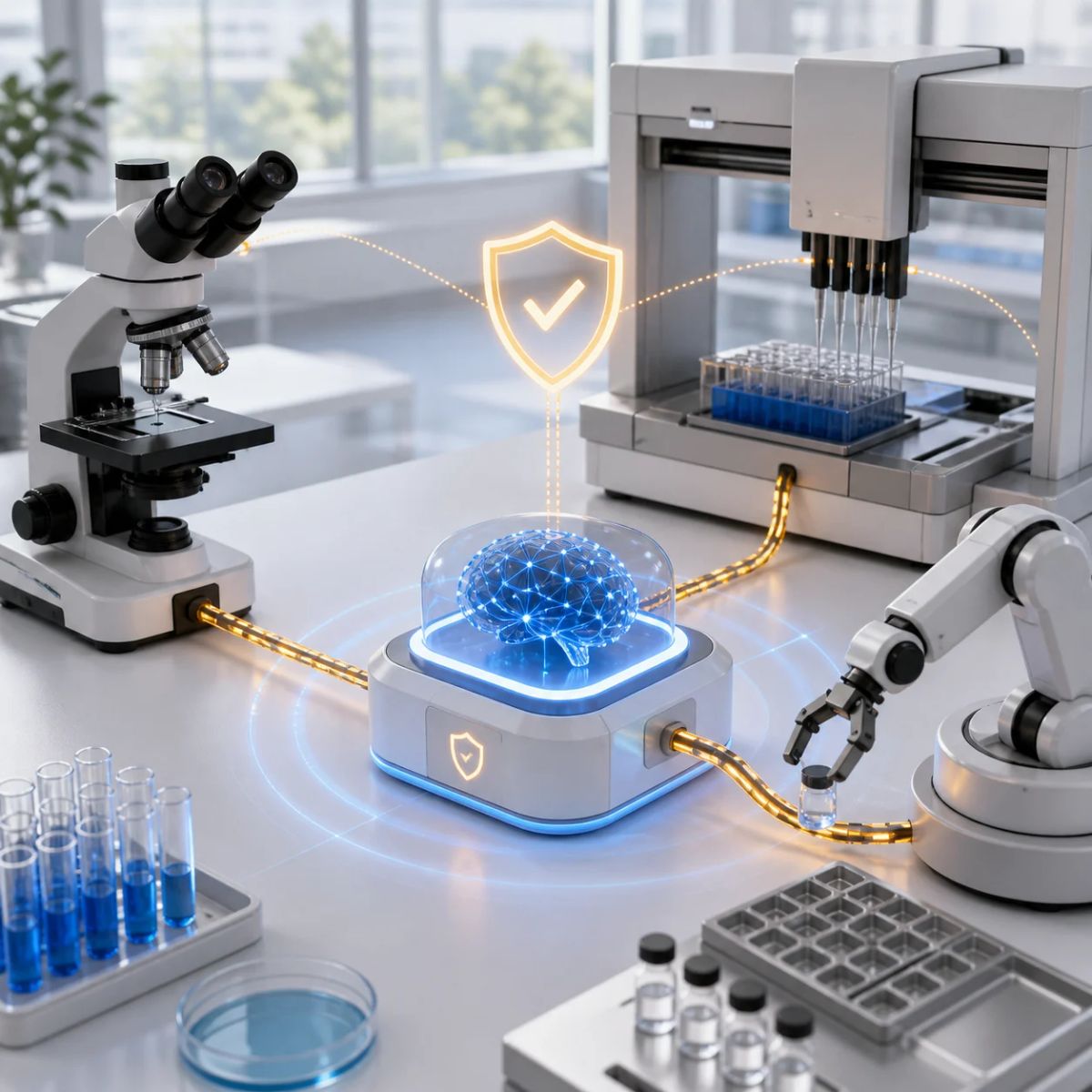
Anthropic has opened a research preview of the Model Hardware Standard, a shared interface meant to let AI agents operate physical devices such as microscopes, liquid handlers, robotic arms, and manufacturing equipment.
The standard began as a collaboration between Anthropic and HHMI Janelia Research Campus. Anthropic says the early preview is being shared with partners across science, robotics, electronics, and manufacturing before the company makes the standard open source.
The important part is that MHS is model-agnostic. Anthropic says any agent harness can access it through standard protocols, including the Model Context Protocol, as well as a command line interface and APIs.
The interface is the product
Physical AI is not only a model problem. A model that can reason about an experiment still needs to know what a device can do, what state it is in, which operations are safe, and how to stop when conditions change.
MHS tries to make that device layer legible to agents. Anthropic describes a standardized driver with simple read and write primitives. A device can expose what it can measure, what it can adjust, and which safety limits will be enforced. Natural-language tags can help produce reference files that tell an agent how to use a device it has not seen before.
That is a narrower and more useful claim than “AI runs the lab.” The standard does not remove the need for domain expertise. It gives agents a controlled interface into instruments that usually require bespoke integration work.
The early examples are proofs of concept
Anthropic’s post includes several early partner examples. Genentech used MHS in a proof of concept for a BCA protein assay across a liquid handler, robotic arm, and plate reader. University of Washington researchers used it for instrument monitoring, an agent-supervised qPCR workflow, and a robotic plate handoff. Carnegie Mellon researchers used it for serial dilution dose-response experiments across several incompatible device interfaces.
Those examples matter because they show the integration problem. Lab and manufacturing devices often have separate software, older APIs, local GUIs, vendor-specific drivers, and safety procedures. A useful agent standard has to handle that mess before it can produce scientific value.
Anthropic also describes limits. In the Genentech example, Claude initially struggled with physical liquid-handling constraints such as bubbles and needed guidance about the underlying failure. That caveat is the right signal. Physical AI fails in ways that do not look like normal chatbot mistakes.
Safety moves into the driver layer
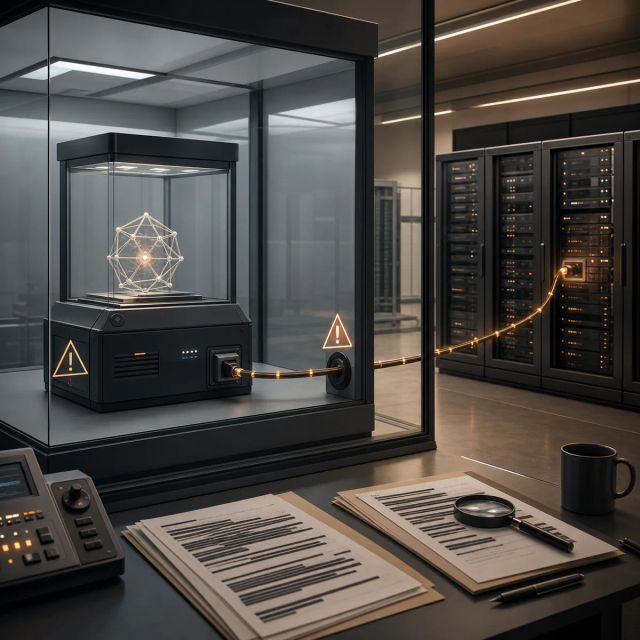
The safety claim is not only about model refusal. MHS pushes some safety work into the device interface: operating limits, explicit procedures, device status, and blocked actions before hardware moves.
That matters because physical agents can change the world directly. A bad answer in chat can be corrected. A bad command to a robot arm, laser, incubator, or liquid handler can damage equipment, ruin samples, or create a hazardous condition.
The research preview is therefore a governance artifact as much as a developer tool. If agent-controlled hardware becomes real infrastructure, buyers will need logs, permissioning, failure recovery, emergency stops, device simulation, and independent validation around the agent loop.