Future of Life Institute’s Summer 2026 AI Safety Index gives no major AI lab better than a C+.
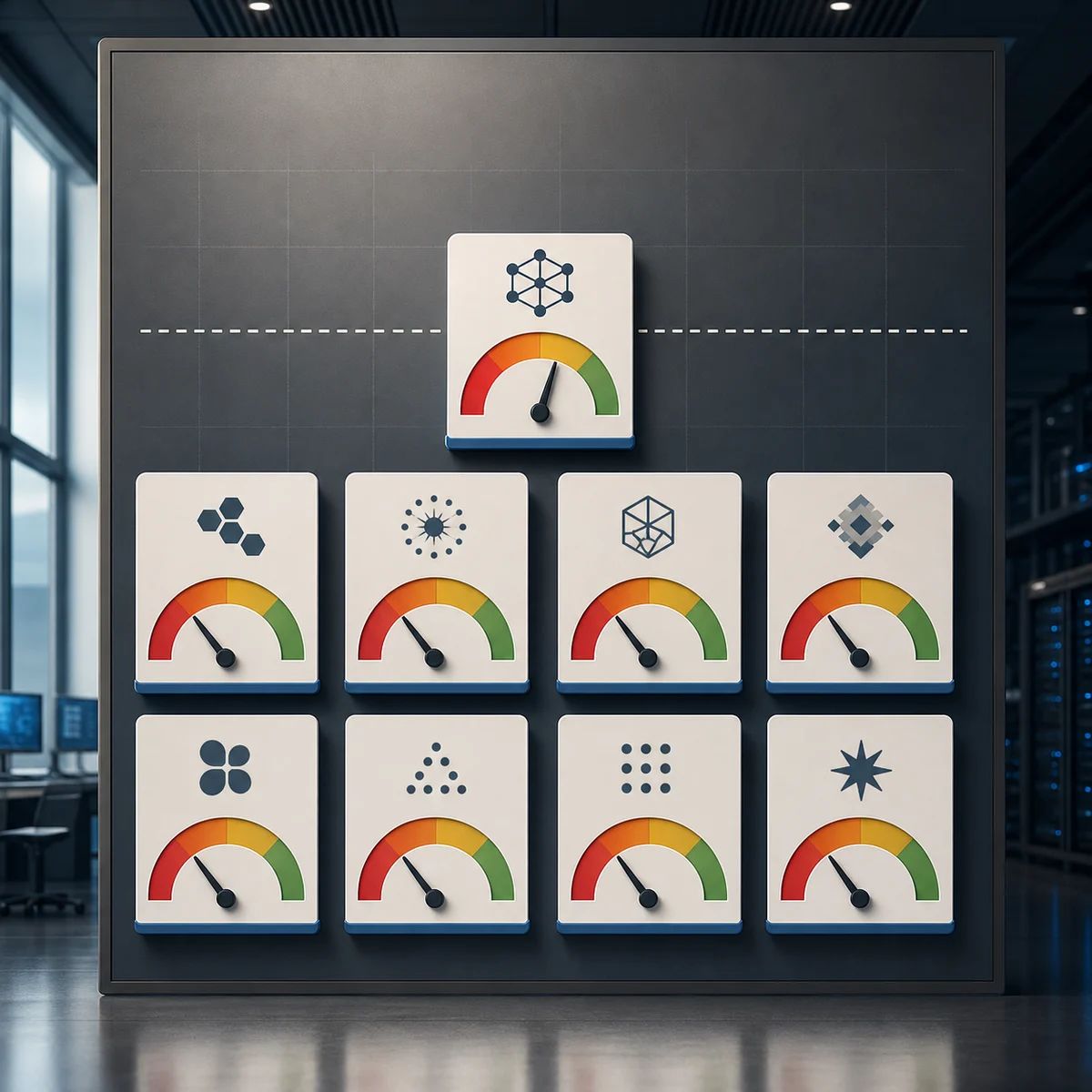
The index evaluates nine companies across 37 indicators and six domains: risk assessment, current harms, safety frameworks, existential safety, governance and accountability, and information sharing. Anthropic ranks first with a C+ and a 2.66 score. OpenAI follows with a C and 2.28, then Google DeepMind with a C and 2.01.
After that, the grades fall quickly. Meta receives a D+ with a 1.32 score. Z.ai and Alibaba Cloud receive D- grades. xAI, DeepSeek, and Mistral receive F grades.
Those are FLI’s assessments, not regulatory findings. But the scorecard is still useful because it compares labs on the same outside rubric at a time when frontier systems are getting more capable and more widely deployed.
The ceiling is the story
The ranking will draw attention because it names winners and losers. The more important finding is how low the top score is.
Anthropic leads the index and still lands at C+. OpenAI and Google DeepMind, both central to frontier-model deployment and enterprise adoption, remain in the C range. FLI’s domain table shows especially weak marks in existential safety across the industry, with even the leaders scoring below their stronger information-sharing and governance categories.
That matters for buyers, policymakers, and developers because safety claims are often made company by company. A cross-lab scorecard makes it easier to ask whether the industry is improving as a system, not only whether one lab has better documentation than another.
The third-party coverage points to the same tension. TIME framed the results around the absence of any A grade. Axios emphasized the report’s claim that companies have retreated from some earlier safety pledges while capabilities continue to grow.
Scores are evidence, not the whole audit
The index should not be treated as a final truth about each model or deployment.
FLI is an advocacy and policy organization, and the scorecard reflects its methodology, expert panel, company survey process, and public evidence review. A company can disagree with the weights, the evidence window, or the interpretation of a policy. Open-model companies may also argue that transparency and controllability should be scored differently.
That does not make the scorecard irrelevant. It makes the methodology part of the evidence. The useful way to read the index is to ask what it rewards, where it sees gaps, and whether a lab can point to public, testable practices that would change the assessment.