GitHub has put stacked pull requests into public preview, giving developers a native way to split a large change into ordered, reviewable layers.
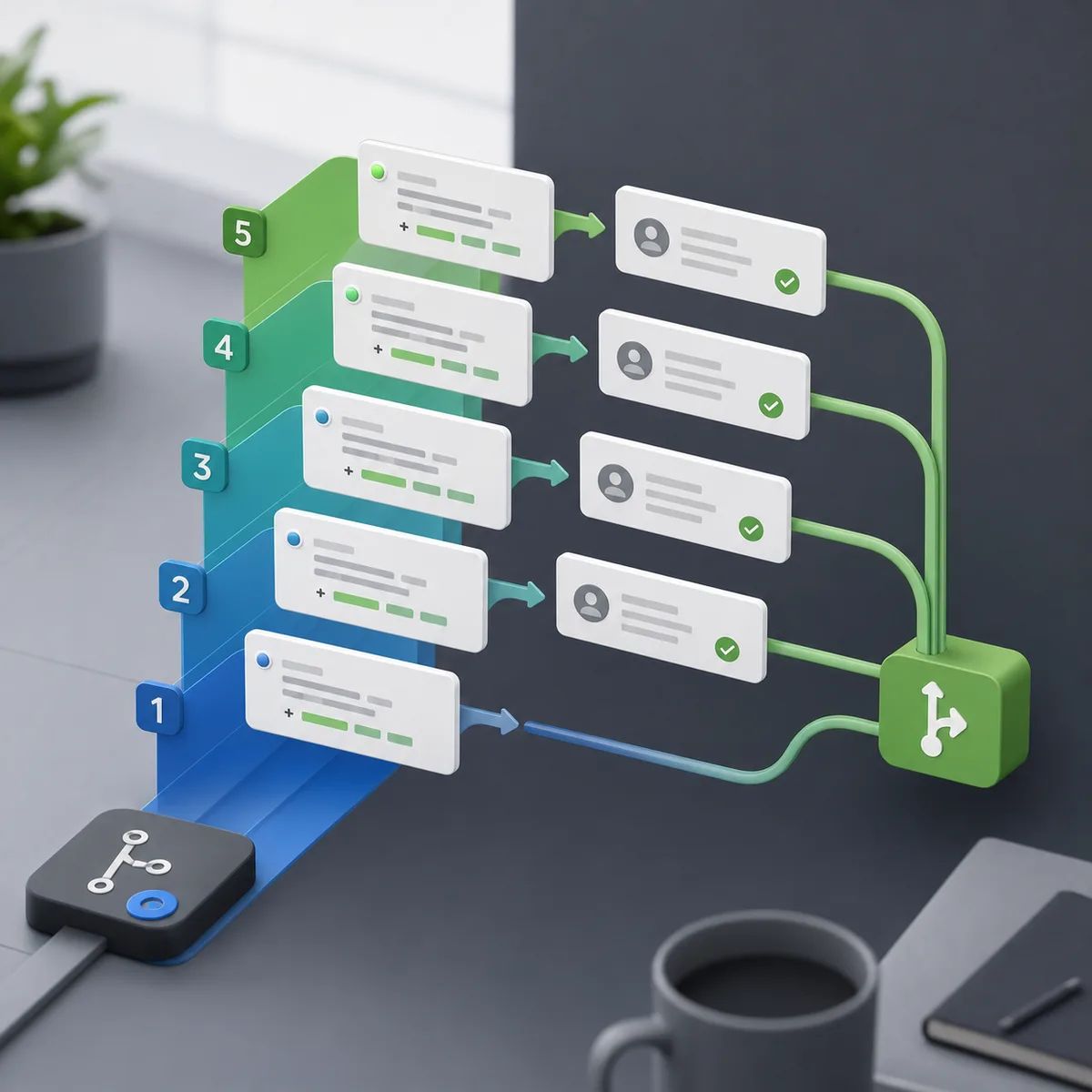
The July 30 changelog says a stack is a series of pull requests where each pull request represents a focused layer of a larger change. GitHub says each pull request can be reviewed and checked independently, and that the stack can be merged together once ready.
The feature is not only for AI agents. GitHub says stacks can be created from github.com, the GitHub CLI, GitHub mobile, or with a coding agent such as GitHub Copilot using the gh-stack skill.
That last path is the agent angle. Coding agents are good at producing lots of code quickly. Review systems are still built around human attention. Stacked PRs give both sides a smaller unit of review.
The review object changes
Large AI-generated pull requests create a familiar failure mode: the change may be coherent from the agent’s point of view, but too broad for a reviewer to trust quickly. A single patch can mix cleanup, dependency updates, API changes, tests, and product behavior.
Stacked pull requests make the shape of the work visible. One layer can change a helper, another can update call sites, another can add tests, and another can wire the feature. Reviewers can focus on the layer in front of them instead of reverse-engineering the agent’s plan from one large diff.
This does not remove review risk. A stack can still hide a bad assumption in an early layer, and later pull requests can make the overall effect harder to reason about. But it gives teams a structure that better matches how complex changes are supposed to be reviewed.
Agents need stack discipline
For coding agents, the important rule is not “use stacks for everything.” It is “use stacks when the review boundary is real.”
A useful stack should let a reviewer approve one layer without mentally reviewing the whole feature. If every pull request in the stack depends on reading all the others, the team has only moved a large diff into multiple tabs.