Hugging Face has published a practical benchmark for a new software-maintenance question: is this tool easy for agents to use?
The post uses transformers as the case study and measures not only whether a coding agent gets the right final answer, but how it gets there. Hugging Face tracks process signals such as work required, model behavior across library revisions, and whether the agent chooses a new CLI or falls back to older Python APIs.
That is the useful shift. As coding agents become real users of developer tools, libraries need to be designed for humans and agents. A confusing API, stale docs page, or hard-to-discover command can send an agent into a longer, more expensive path even if a human would eventually figure it out.
The process matters as much as the answer
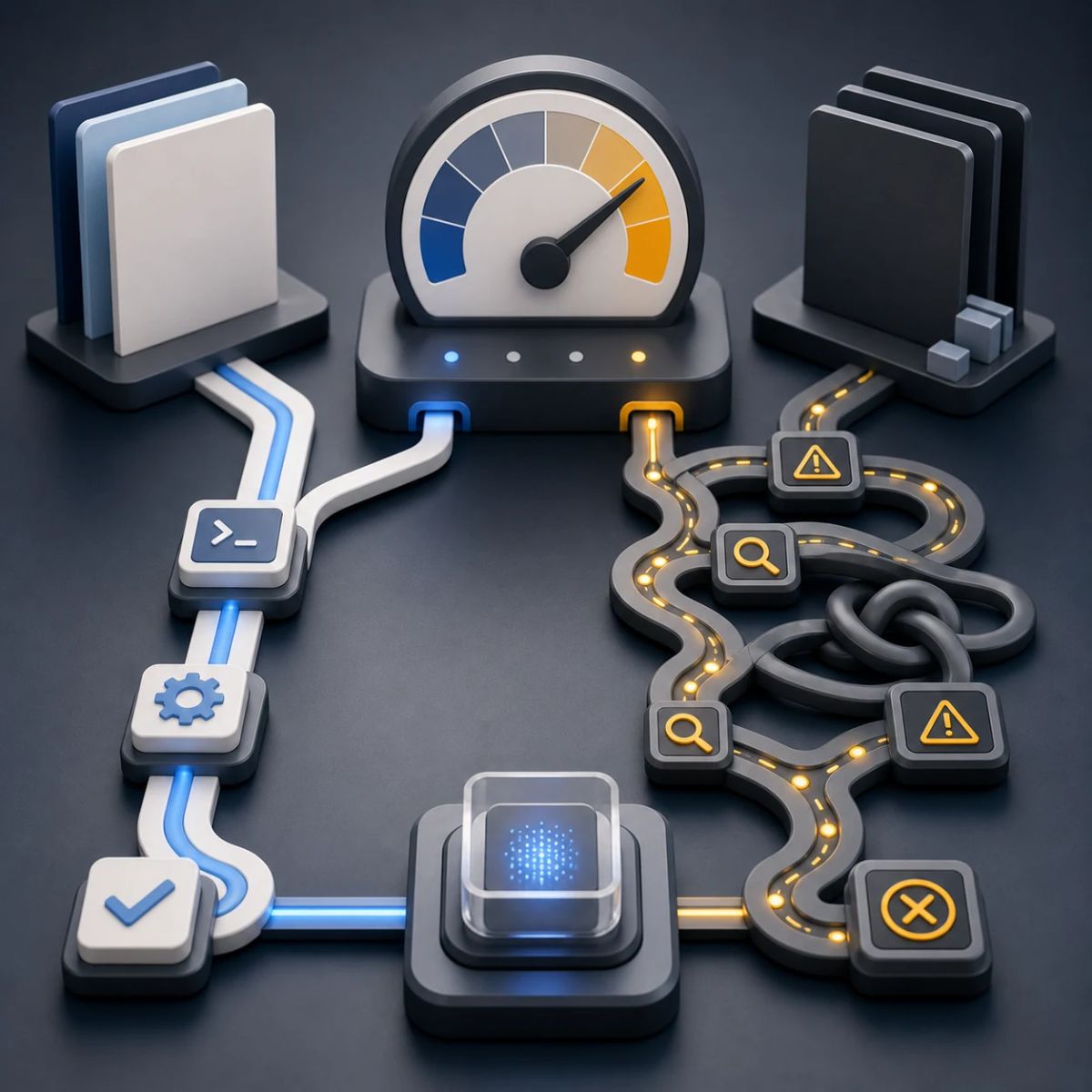
Most benchmarks collapse a task into pass or fail. That is useful, but it hides the path. Two agents can both solve a task while one burns far more tokens, makes more wrong calls, or bypasses the intended tool entirely.
Hugging Face’s post argues for measuring the whole process. The article describes a harness that can compare models, revisions, and tasks, then look at how agents interact with software. The target is not a general intelligence leaderboard. It is a way to see whether a tool change actually makes agentic use better.
That matters for maintainers. If a new CLI, skill file, or documentation pattern helps an agent find the right route faster, that is now a product-quality improvement. If it only helps in a demo while agents still choose the old API in real tasks, the tooling is not doing its job.
Agent-friendly software is not just simpler software
Agent-friendly design does not mean removing all complexity. It means making the intended path legible to an automated worker that reads docs, inspects examples, runs commands, and recovers from errors.
For humans, a slightly clunky API is irritating. For agents, clunkiness can become cost. The model may explore more files, try more calls, hallucinate missing arguments, or rewrite logic from scratch. Hugging Face’s framing makes that measurable by looking at the work required before success.
The transformers case study is a good fit because the library has a large surface area and many historical usage patterns. An agent may encounter older examples, current docs, CLI changes, and different model-loading paths. The benchmark asks whether the software guides the agent toward the best current route.
The result is a maintenance metric
This kind of benchmark gives maintainers a new release question. Did this change improve agent success? Did it reduce tokens, time, or errors? Did it make the new interface discoverable enough that agents used it? Did it help only one model, or did the improvement hold across several open models?
Those questions are more concrete than saying a project is “agent-ready.” They also help teams decide where to invest. A small documentation or CLI change may have more effect on agent performance than a bigger internal refactor if it changes the path agents actually take.
The caveat is scope. Hugging Face is not publishing a universal ranking of every software tool. It is showing a benchmark pattern around one library and agent workflow. Teams should copy the method before they copy any conclusion.