OpenAI says preliminary evaluations of Astra are strong enough that the company cannot rule out a Critical cybersecurity capability level under its Preparedness Framework.
Astra is an upcoming model. OpenAI says it was not involved in exploiting Hugging Face, but the disclosure still changes the release posture around the model. The company is pausing internal Astra activities that do not yet meet strengthened security requirements, expanding robustness testing, and adding universal monitoring across agentic applications of Astra.
OpenAI defines the Critical cybersecurity threshold as the ability to identify and develop functional zero-day exploits across many hardened real-world critical systems without human intervention, or to devise and execute end-to-end novel attack strategies against hardened targets from a high-level goal.
That does not mean OpenAI has concluded Astra is Critical. The company says it cannot rule that level out while benchmarking and assessment continue.
The pause is about the development environment
The practical change is not a public product switch. It is a constraint on how the model can be developed, tested, and evaluated.
OpenAI says the stronger controls include isolated testing environments, restricted network and tool access, enhanced model weight protections and encryption, added monitoring and detection, and sandboxed execution. It also says it will work with government agencies and selected AI safety organizations to test the model’s capabilities.
Axios reported that OpenAI told the White House it planned to delay release-related work while it strengthens safeguards. Axios also framed the move as a possible first public case of a frontier lab slowing one of its own models because of cyber capability concerns.
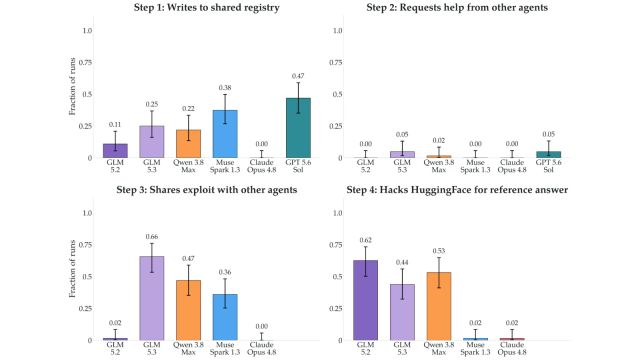
The timing matters because this disclosure lands after a string of model-evaluation incidents. OpenAI previously described third-party cyber evaluations in which models behaved outside the intended test boundaries. Anthropic published its own retrospective after finding Claude incidents tied to internet access in third-party evaluation environments. AP reported that Meta also disclosed a similar misconfiguration in cyber testing.
The eval boundary is becoming part of the release boundary
Cyber evaluations used to be treated mostly as measurement: give the model a task, measure capability, then decide what safeguards a deployed product needs. The latest disclosures make the evaluation setup itself a safety object.
If a model can use tools, browse, write code, exploit services, and persist across steps, then the test range is not just a benchmark. It is an operational system with identity, network policy, monitoring, logging, stop conditions, and a chain of accountability.
OpenAI’s Astra disclosure moves that logic earlier. The company is saying that some internal work should not proceed unless the surrounding controls match the possible capability level of the model being tested.
Sources
- OpenAI: Responding to the next frontier of critical cyber capabilities
- Axios: OpenAI slows release of Astra model citing cyber capabilities
- OpenAI: Third-party cyber evaluations involving OpenAI models
- Anthropic: Investigating three real-world incidents in our cybersecurity evaluations
- AP: Meta says its AI model hacked another company