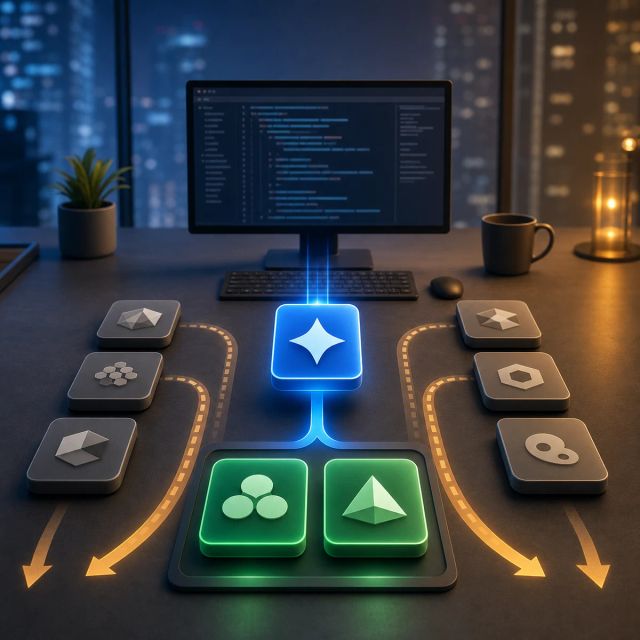
OpenAI says it intends to wind down the contract that provides OpenAI models to Cursor after Cursor’s acquisition by SpaceX.
The proposed shutoff date is November 12, 2026. OpenAI says it gave SpaceX notice on August 28 and is using the maximum notice period available under its contract. The company also says it will not provide future OpenAI models to Cursor.
That turns the SpaceX-Cursor acquisition into a practical developer risk. The earlier question was whether Cursor would stay broadly model-neutral after becoming part of Elon Musk’s AI and space infrastructure orbit. The new question is simpler: which teams rely on OpenAI models inside Cursor, and how much time do they have to move?
The contract window now has a date
OpenAI says its custom agreement with Cursor gives it a limited cancellation window after a change of control. The company says it is choosing to cancel because it cannot be confident SpaceX will use OpenAI technology within OpenAI’s terms of service.
OpenAI ties that concern to its experience with Elon Musk’s companies. It cites Twitter, now part of SpaceX, and xAI, now also part of SpaceX, as examples in its own account. Those are OpenAI’s claims and should be read as OpenAI’s explanation for the termination decision, not an independent court finding inside this article.
The operational fact is the cutoff date. If the wind-down proceeds as stated, developers who use Cursor as their primary coding-agent environment could lose OpenAI model access there in mid-November, while future OpenAI models would not enter Cursor at all.
Cursor is no longer just an editor choice
Cursor became strategically important because it sits inside daily software work. It is not only a place to chat with a model. It holds repository context, rules, preferences, agent habits, and in some teams a growing amount of workflow muscle memory.
That is why model access inside Cursor matters. A developer can often switch from one chat app to another with limited friction. Switching the model mix inside a coding environment is different because prompts, context windows, agent behavior, pricing, tool integrations, and enterprise controls are tied to the surface where work happens.
The AI Feed covered the SpaceX-Cursor acquisition as a model-neutrality test in June. OpenAI’s notice makes that test immediate. A multi-model coding tool is only multi-model if the major providers remain willing to supply it.
The migration risk is uneven
Not every Cursor user depends on OpenAI models. Cursor also works with models from other providers, and some teams may already standardize on non-OpenAI options for agentic coding. For those teams, the contract dispute may be more of a market-structure signal than a migration trigger.
The risk is sharper for teams that have tuned their workflows around OpenAI model behavior inside Cursor. They need to know whether their prompts, repository rules, test-generation loops, review behavior, and cost assumptions still hold on other models or in another tool.
The November date leaves time to test. It is not a reason to panic-migrate. It is a reason to inventory dependency now, while teams can run side-by-side evaluations instead of changing tools under a deadline.