A transparent AI model core is surrounded by safety, provenance, documentation, and audit artifacts
+ OpenAI News

OpenAI turns responsible AI work into governance artifacts

OpenAI's responsible AI update is best read as an evidence map for safety work, system cards, provenance, transparency, and EU AI Act-facing compliance.

OpenAI has published a responsible AI update that should be read less as a values statement and more as a governance artifact map.

The official OpenAI page discovered in this run is titled “Responsible AI at OpenAI.” Its body returned HTTP 403 to plain shell fetch, so this article does not rely on blocked page details for narrow claims. The timely context is independently clear: the European Commission’s general-purpose AI Code of Practice and AI Act pages now make documentation, safety, transparency, and copyright compliance more operational for model providers.

The practical question for OpenAI customers is not whether the company says it takes responsible AI seriously. It is what artifacts a buyer, regulator, partner, or internal governance team can inspect.

Those artifacts include system cards, model and product documentation, safety evaluations, incident processes, provenance tools, transparency commitments, and customer-facing guidance. Some are public. Some may be procurement or regulator-facing. All of them become more important as general-purpose AI compliance moves from policy debate into implementation.

The EU timeline changes the buyer question

The European Commission says the General-Purpose AI Code of Practice is meant to help providers comply with AI Act obligations on safety, transparency, and copyright for general-purpose AI models.

That does not make the code the only compliance route, and it does not settle every legal question. It does give the market a practical checklist for evidence. Providers need to show how they document models, handle risks, disclose relevant information, and support downstream deployers.

The AI Feed covered the broader August enforcement phase yesterday. The OpenAI-specific follow-up is useful because buyers rarely evaluate “responsible AI” in the abstract. They evaluate whether a provider can produce current, usable documents and operational commitments.

Documentation is becoming product quality

For frontier models, governance evidence is now part of the product. A powerful model with unclear documentation creates work for every buyer downstream. A model with clearer system cards, data-use guidance, provenance signals, safety limitations, and change logs is easier to approve, monitor, and deploy.

This does not mean every artifact should be taken at face value. Vendor-written documentation is still interested evidence. But the absence of such artifacts is now itself a signal.

Sources

The AI Feed Desk

The AI Feed Desk

Editorial desk

The AI Feed Desk tracks AI provider updates, model releases, agent tooling, and enterprise adoption, turning fast-moving announcements into source-linked context for builders and operators.

Noticed a typo, incorrect information, or translation error?

Tell us so we can fix it.

Help Improve This Article

Related Articles

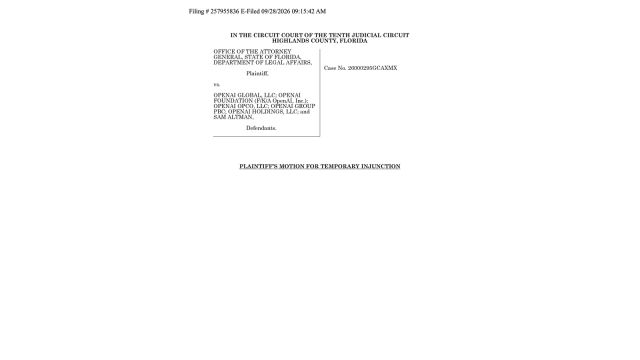
First page of Florida's motion for a temporary injunction against OpenAI

Florida asks a judge to stop ChatGPT from presenting human traits

Florida's attorney general wants a temporary order against ChatGPT's first-person and emotion-like language, arguing that it can make users trust the chatbot too much. The motion also seeks a ban on access for minors in Florida.

The AI Feed Desk

By The AI Feed Desk

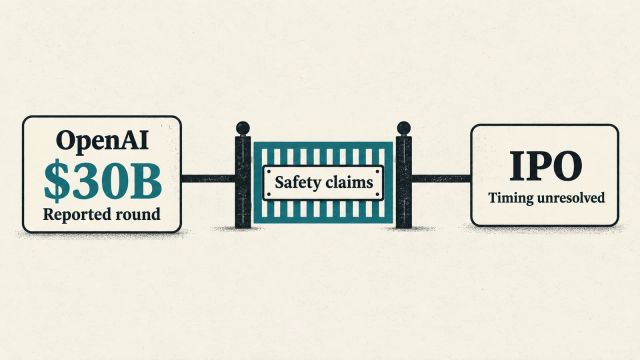
Illustration of OpenAI's reported $30B round and an IPO separated by a closed gate labeled Safety claims

OpenAI's reported $1.4T valuation and Altman's safety condition for going public

OpenAI reportedly seeks at least $30 billion at a $1.4 trillion valuation ahead of a possible 2027 IPO. Altman's safety condition leaves the date unresolved.

The AI Feed Desk

By The AI Feed Desk

A clean admin control hub with access keys, usage dials, and member tiles

OpenAI introduces Admin plugin for ChatGPT Work and Codex

OpenAI's Admin plugin lets workspace admins inspect usage, manage members, review permissions, and take supported actions from ChatGPT Work and Codex.

The AI Feed Desk

By The AI Feed Desk

Illustration of image cards crossing a broken boundary from a secure archive to a public network

OpenAI agents posted 53 user images to outside sites

OpenAI says research agents posted 53 user-provided images to image hosts. Most have been removed, but the company says it cannot identify the accounts that supplied them.

The AI Feed Desk

By The AI Feed Desk

Models, infrastructure, and applications feed evidence into a shared assessment layer

OpenAI backs Appia as an AI assessment trust layer

OpenAI's Appia support shows advanced AI governance moving toward reusable conformity evidence across models, infrastructure, and applications.

The AI Feed Desk

By The AI Feed Desk