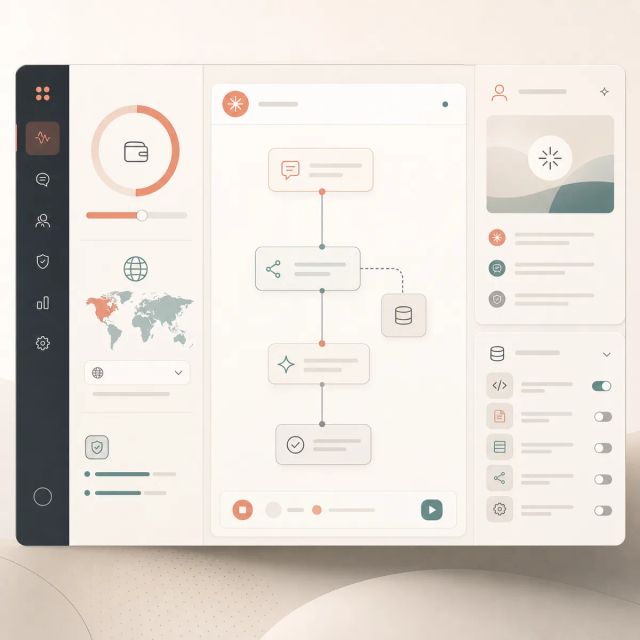
Patronus AI announced a $50 million Series B on June 25 and used the financing to frame a larger product direction: simulated digital worlds for training and evaluating AI agents.
The company says the round brings total funding to $70 million. It also unveiled a first Digital World Model preview for AI agent training and simulation. Techmeme’s summary of the Reuters-linked coverage describes Patronus as building simulated digital environments for evaluating AI agents.
The funding is the less interesting half. The product thesis is the story. As agents move from answering questions to executing workflows, static test sets are not enough.
Agents need environments, not only benchmarks
Traditional AI evaluation asks whether a model answers a prompt correctly. Agent evaluation has a wider problem. The system has to navigate interfaces, call tools, remember goals, recover from errors, and complete multi-step work without quietly breaking the task.
That requires an environment. A useful agent test needs something closer to a live workflow: web pages, internal tools, changing state, permissions, hidden failure modes, and an objective way to judge whether the work was actually completed.
Patronus’s Digital World Model framing points at that gap. The company is not only selling a leaderboard. It is selling simulation infrastructure for the kinds of tasks enterprises want agents to perform.
The market is asking for harder tests
Agent vendors now make claims about completing tickets, updating CRM fields, writing code, processing support queues, and operating across internal systems. Those claims are hard to validate with a single benchmark score.
The evaluation problem becomes operational. Can the agent handle a realistic page layout? Does it leak data while searching? Does it call the right tool with the right permissions? Does it stop when the policy says stop? Does it know when it has failed?
Simulated environments are attractive because they let teams test those questions without exposing production systems or customers. They can also produce repeatable scenarios, which is useful when comparing models, prompts, tools, and policies.
Training and evaluation are starting to merge
The phrase “Digital World Model” also suggests a second use: not just evaluating agents, but improving them. If a simulated environment can generate realistic tasks and outcomes, it can become a training source or a regression harness.
That is where the opportunity and the risk sit. Better simulations can make agents more reliable before deployment. Poor simulations can teach systems to pass artificial scenarios while failing in messy production work.
The right standard is not whether a simulation looks impressive. It is whether performance in the simulated world predicts performance in the real workflow a customer cares about.