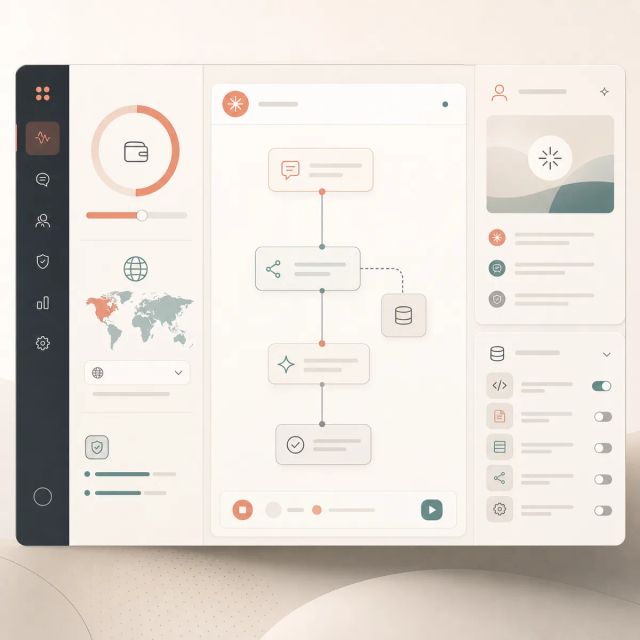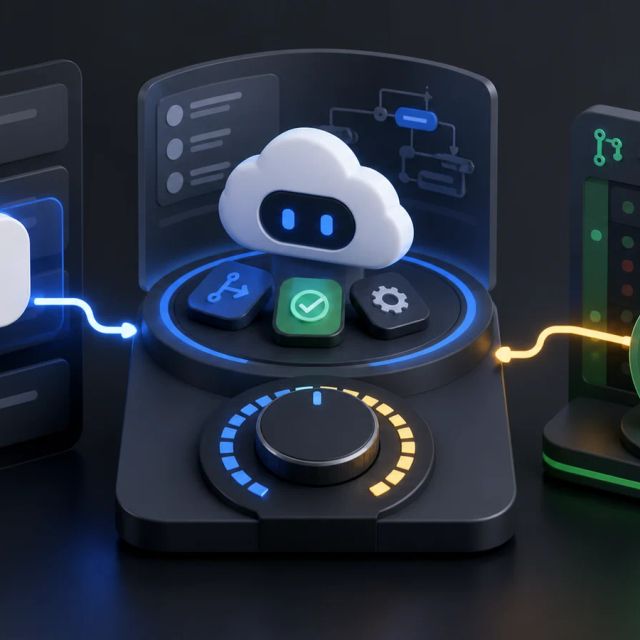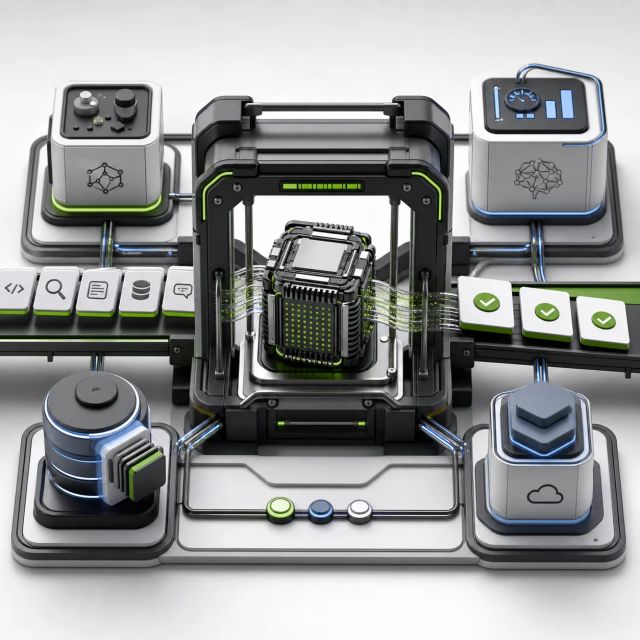
Sakana AI has launched Fugu as a product that looks like one model from the outside and a coordinated model pool on the inside. The Fugu page describes a single API that dynamically selects, switches, and coordinates expert models for complex multi-step tasks.
That makes Fugu different from a normal model launch. Sakana is not only saying “use this new model.” It is selling the orchestration layer: a system that learns how to assemble and route agents without asking the user to hand-design the workflow every time.
The company frames Fugu around coding, reasoning, and quality-critical work. It also says the product is not yet available in the EU/EEA while Sakana works toward GDPR and EU-specific compliance. That limitation is a useful reminder that model orchestration is also a governance product. The more providers and models sit behind one endpoint, the more important controls, routing choices, and regional rules become.
One endpoint hides a model pool
Fugu’s pitch is simple: send work to one API, let the system coordinate multiple models behind it. Sakana says Fugu can access a pool of specialized models and handle selection and switching for each task.
That matters because complex agent work is rarely a single-model problem. One model may be strong at planning, another at code, another at mathematical reasoning, another at extraction, and another at cheap draft work. A team can wire those choices manually, but hand-built orchestration becomes brittle as providers, prices, context windows, and capabilities change.
Sakana’s claim is that Fugu learns coordination patterns instead of relying only on human-designed roles and workflows. That is the product bet: the coordinator becomes a model-like asset, not just application glue.
Provider control is part of the product
The Fugu page says users can control which agents participate in the model pool and opt out of specific providers or models for data, privacy, compliance, or organizational requirements.
That feature is more important than it sounds. Enterprise buyers may not be allowed to send certain workloads to certain providers. They may need to exclude a model because of data policies, contract terms, regional limits, safety posture, or internal approval status. If orchestration is opaque, it becomes hard to approve. If orchestration is controllable, it can fit into procurement and risk processes.
This is the same reason the EU/EEA caveat matters. A multi-model system has more surfaces than one model endpoint. It has routing, logs, providers, fallback behavior, data transfer, and model-specific retention or policy differences. Fugu’s promise depends on making those choices manageable rather than hidden.
Performance claims need independent context
Sakana’s blog index positions Fugu Ultra against leading frontier systems across engineering, scientific, and reasoning benchmarks. Those claims are useful as a signal of ambition, but they should be treated as company claims until each benchmark source is opened and compared directly.
The stronger near-term story is architectural. The AI market is full of individual model releases. Fugu points at a different layer: learned model coordination as the thing customers buy. If that layer works, buyers may start comparing systems by reliability, cost-performance, provider flexibility, and governance controls rather than only leaderboard rank.
The counter-case is complexity. A coordinator can improve results, but it can also make failures harder to explain. When an answer is wrong, a customer may need to know which model was used, what context moved where, and whether the routing decision was appropriate. A single API should reduce user complexity without erasing operational traceability.