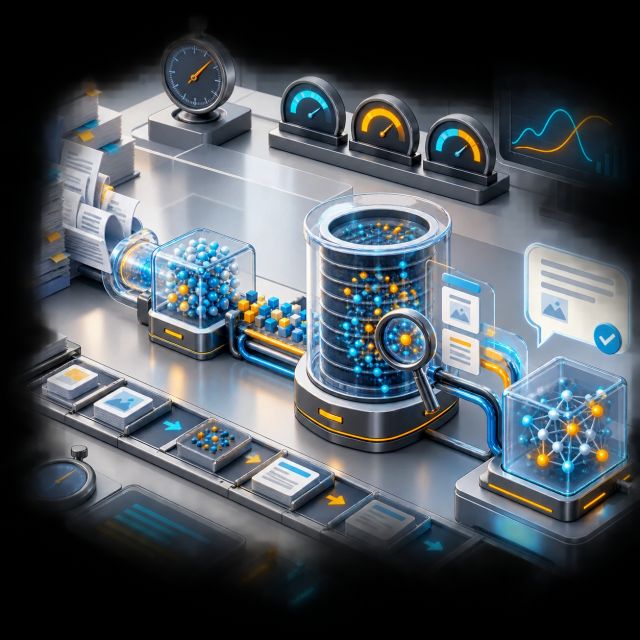
A math tutoring transcript pauses at a decision point while an AI tutor chooses between giving a hint and waiting
+ Large Language Models News

Ai2 TutorMoments tests whether AI tutors over-help students

Ai2 released TutorMoments, a replay-based benchmark for testing whether AI tutors know when to help and when to hold back.

Ai2 has released TutorMoments, a replay-based evaluation for testing whether AI tutors know when to help a student and when to hold back.

The preview benchmark is built from real one-on-one math tutoring sessions. Experienced math teachers mark moments where a tutor had to decide between scaffolding the problem and pushing the student to do more reasoning. TutorMoments then pauses the transcript at that decision point, hands the session to a language model, and evaluates what the model tutor does with a simulated student.

Ai2 says models told only to “tutor well” tend to over-help by giving too much support and rarely pushing students to deeper thinking. Prompting the tutor to consider the trade-off between help and rigor improves performance, but Ai2 says it does not close the gap to human tutoring.

The released TutorMoments-Preview dataset includes 462 de-identified, text-only transcripts from real one-on-one math tutoring with U.S. students in grades 2-7. Ai2 says the dataset has more than 1,500 teacher-annotated key moments and several thousand free-text annotations from 27 U.S.-based teacher annotators.

The benchmark scores timing, not just answer correctness

Most education-AI demos show whether a model can explain a concept or solve a problem. TutorMoments asks a harder teaching question: should the tutor explain right now?

That matters because help can be harmful when it removes the student’s work. A good tutor may answer a question with another question, ask the student to explain a correct step, or leave productive struggle in place for a little longer. A generic assistant trained to be helpful can short-circuit that process.

The GitHub repository lists metrics for appropriate scaffolding, appropriate rigor, avoiding over-scaffolding, and action taxonomy. That gives researchers a way to compare tutor behavior against teacher-annotated moments instead of rewarding a single fixed behavior such as always hinting or never giving away an answer.

Open data makes the claim easier to inspect

Ai2 released the dataset, replay code, and model tutor replays. The Hugging Face article links the tech report, data, and code, and the repository includes a runnable benchmark package that defaults to the released Hugging Face dataset.

That openness is important because tutoring is context-heavy. A benchmark built on de-identified transcripts, teacher annotations, and replayed key moments gives outsiders more to inspect than a vendor claim about a tutoring chatbot.


Sources

The AI Feed Desk

The AI Feed Desk

Editorial desk

The AI Feed Desk tracks AI provider updates, model releases, agent tooling, and enterprise adoption, turning fast-moving announcements into source-linked context for builders and operators.

Noticed a typo, incorrect information, or translation error?

Tell us so we can fix it.

Help Improve This Article

Related Articles

A public model hub sorting many model packages into a few high-traffic infrastructure lanes

Hugging Face says open-model adoption is not attention

Hugging Face's summer 2026 open-model report says model repositories grew quickly, while actual downloads concentrated in a small infrastructure layer.

The AI Feed Desk

By The AI Feed Desk

An evaluation table is inspected with provenance tags, audit trails, cost markers, and a warning flag for leaderboard claims

MLCommons publishes a trust test for AI benchmarks

MLCommons says enterprise AI buyers should test benchmark claims for decision fit, data provenance, reproducibility, missing metrics, and gaming risk.

The AI Feed Desk

By The AI Feed Desk

A retrieval pipeline flowing from documents through vector search into a measured answer service

MLCommons introduces an end-to-end RAG inference benchmark

MLCommons introduced an end-to-end RAG inference benchmark that measures document ingestion, vector search, and multi-hop answer generation together.

The AI Feed Desk

By The AI Feed Desk

Metrics, logs, and traces converge toward an unresolved root-cause node on an abstract observability dashboard

ORCA-bench shows coding agents are not ready for on-call root cause analysis

A new benchmark tests AI agents on on-call root cause analysis with metrics, logs, traces, code, and 1,079 incident tasks.

The AI Feed Desk

By The AI Feed Desk

A luminous Q-shaped data path runs between cloud infrastructure and modular open model weights

Alibaba releases Qwen3.8-Max with QwenCloud access and open weights next week

Qwen3.8-Max puts Alibaba back into the frontier-model fight with a large coding-focused model available through QwenCloud now and open weights promised next week.

The AI Feed Desk

By The AI Feed Desk