MLCommons has introduced the first MLPerf end-to-end retrieval-augmented generation inference benchmark, a new test designed to measure the whole RAG pipeline rather than only the language model serving step.
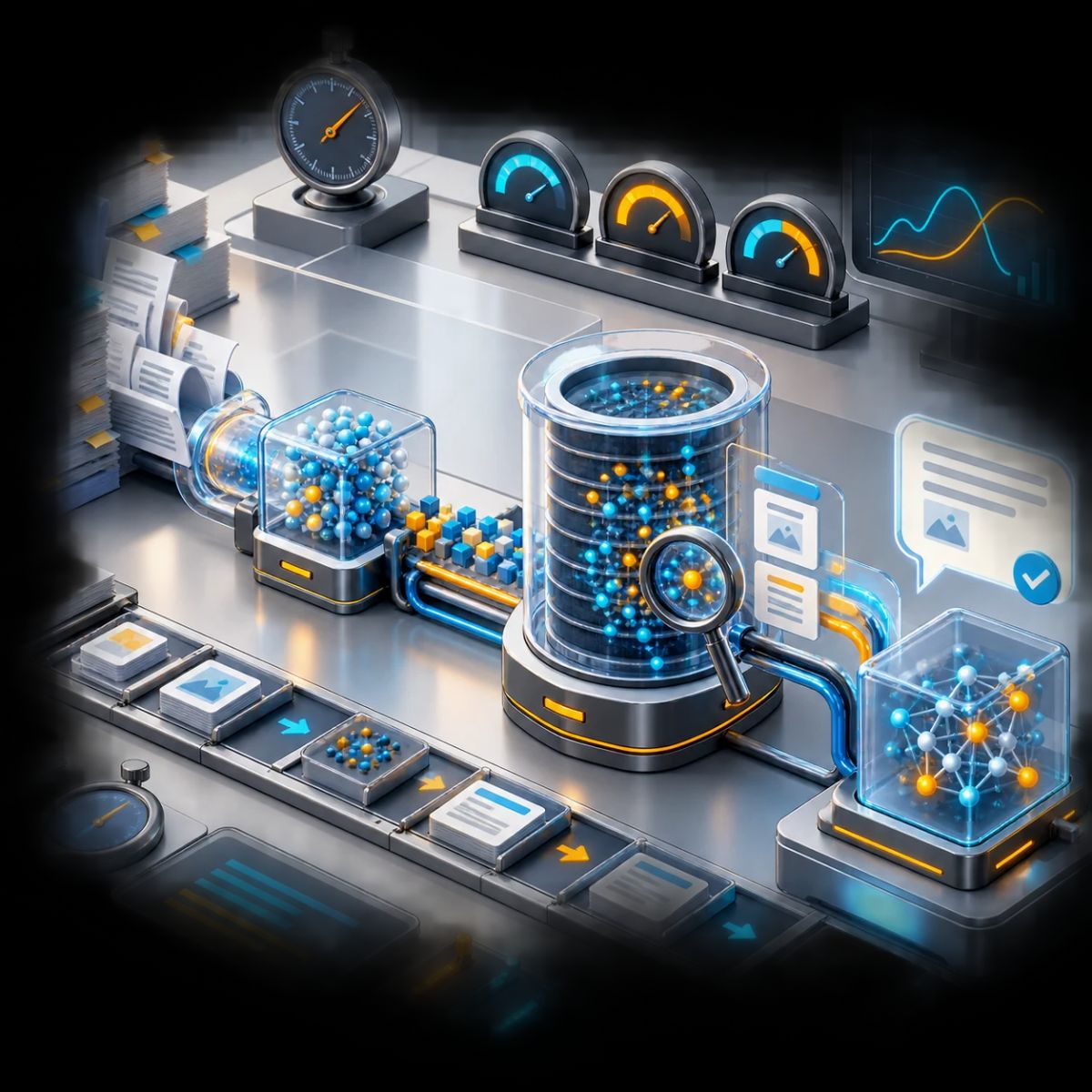
The benchmark covers the sequence that many enterprise AI systems actually run: ingest documents, split them into chunks, convert them into embeddings, build a vector database, retrieve relevant context, and generate an answer for an iterative, multi-hop question-answering task.
That shift matters because RAG is often sold as a simple way to ground models in private or current knowledge. In production, it is a system problem. Retrieval quality, indexing time, embedding throughput, context assembly, generation latency, and answer quality all interact.
The benchmark follows the deployment shape
MLCommons says a production RAG system is rarely a single model. It is a pipeline of several models and infrastructure components that retrieve relevant documents and reason over them to produce a grounded answer.
That is the right unit of measurement for buyers. A model endpoint can look fast in isolation while the full application feels slow because vector search, reranking, document parsing, or context construction is the bottleneck. The opposite can also happen: a faster retrieval layer can expose model-latency or answer-quality limits.
The new benchmark is part of MLPerf Inference, but its scope is broader than a standard accelerator throughput test. It is intended to capture the work from vector database construction through serving an iterative answer pipeline.
RAG needs operational benchmarks
RAG reduces reliance on a model’s weights alone by retrieving external documents at query time. That makes it attractive for enterprise data, policy manuals, support knowledge, legal records, technical documentation, and current information.
The tradeoff is that failure modes move around. A system can retrieve the wrong passage, miss a current document, chunk text poorly, exceed latency budgets, or generate a fluent answer that overstates what the retrieved context supports.
End-to-end benchmarks cannot solve all of those problems, but they can force teams to measure the system as users experience it. That is more useful than optimizing only one component and assuming the application improved.
No public result table yet
The announcement is a benchmark introduction, not a new leaderboard of submitted systems. That distinction matters. The news is the measurement method and benchmark scope, not a claim that one vendor’s RAG stack is now ahead.
For developers and infrastructure teams, the practical move is to compare internal RAG measurements against the benchmark’s shape: ingestion, embeddings, vector database build, retrieval, generation, latency, throughput, and answer quality under realistic query patterns.