Anthropic says Claude found a previously uncharacterized enzyme system in bacteriophage genomes. The company calls it an array-associated reverse transcriptase, or ART. The discovery begins with an unusual arrangement of DNA: a reverse transcriptase gene, a neighboring partner gene, and a long array of regularly spaced repeats.
Claude found the candidate during a search of DNA sequence data directed by Anthropic’s scientists. The company says roughly 950 agents used 210 million tokens over 21 hours. They gathered more than 200,000 reverse transcriptases, selected 3,500 candidate systems, and narrowed those to 20 for detailed reports. One agent spotted the repeat array beside an unusual reverse transcriptase. Anthropic’s human scientists reviewed and tested the candidate in their lab.
The underlying reverse transcriptase had appeared in earlier studies. Anthropic’s claim of novelty is about recognizing the associated repeat array and partner protein as a system. A preprint describes the work. TechCrunch notes that Anthropic’s CEO has also acknowledged a previously found system with similarities to ART.
The result and the open question
The system is found mainly in bacteriophages, viruses that infect bacteria. Anthropic reports that its first lab experiments found the ART array expressed as distinct short RNAs. That is evidence the repeat array is active, beyond a pattern spotted in a database. The company says it is still testing what ART does.
The repeat layout recalls CRISPR, whose arrays of sequences are part of a programmable biological system. Anthropic says several systems with a similar combination of traits can cut, copy, or paste DNA. It does not report that ART itself performs any of those operations. Feng Zhang, who reviewed the preprint, called the RNA-repeat arrays associated with reverse transcriptases intriguing and said they merit further investigation.
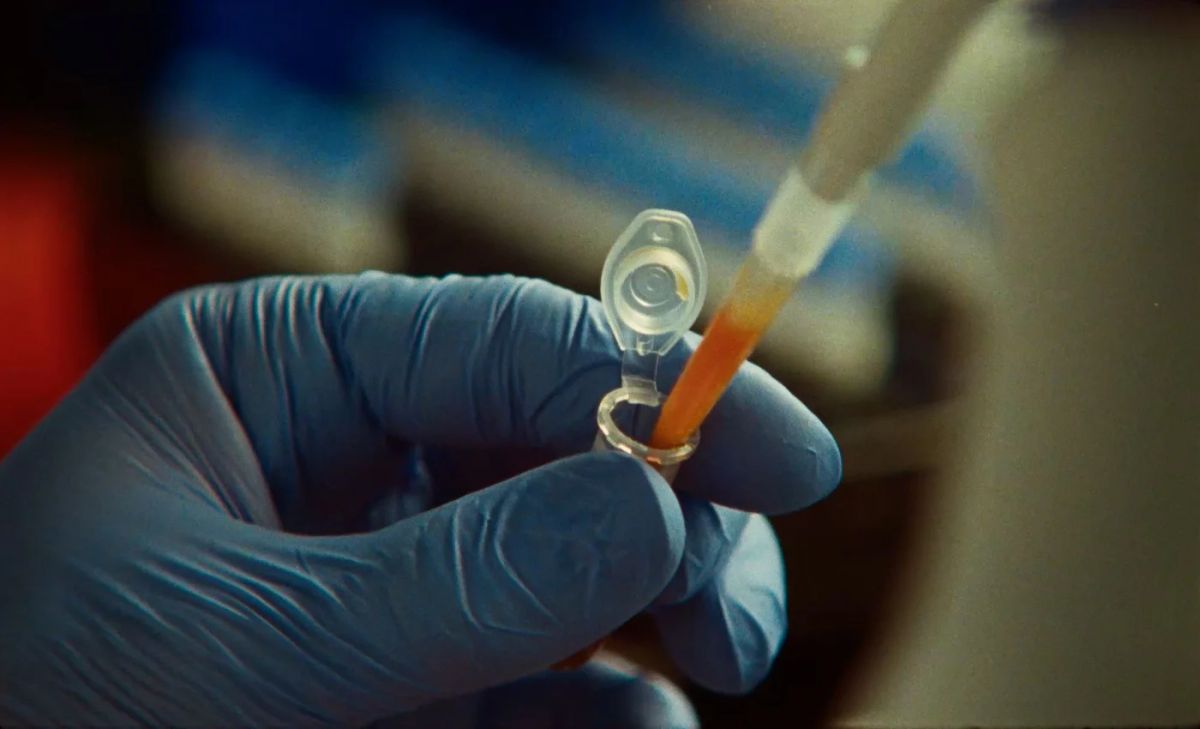
Anthropic says humans performed all physical lab work. Claude searched, analyzed, and proposed candidates. That division matters when assessing both the discovery claim and what the model accomplished.