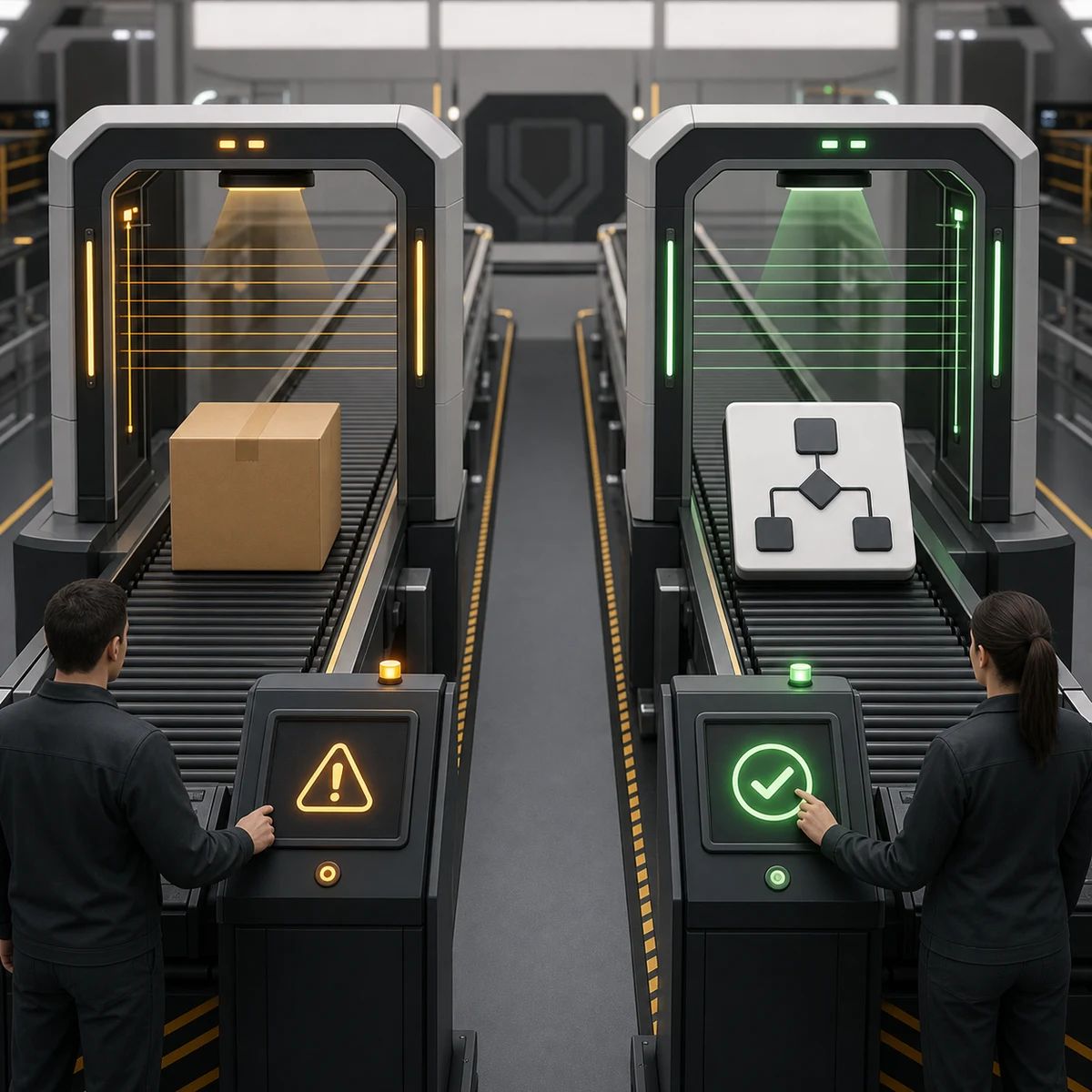
A package registry checkpoint scans npm packages and GitHub Actions workflows before they reach downstream developers
+ AI News

GitHub and npm add friction to suspicious package and workflow publishing

GitHub and npm added publish-time malware scanning, dual-use package metadata, broader Dependabot malware alerts, and workflow holds for suspicious public-repo actions.

GitHub and npm are adding more friction to package and workflow paths that attackers use to turn developer infrastructure into a distribution channel.

The July 28 updates include npm malware scanning before newly published packages become installable, a dual-use content declaration for legitimate security-relevant packages, expanded Dependabot malware alerts using OpenSSF data, and automatic holds for some potentially malicious GitHub Actions workflow runs in public repositories.

GitHub does not frame every one of these changes as an AI response. The timing still fits the risk pressure that AI agents increase: more automated discovery, more credential abuse, more generated packages, and faster movement through CI/CD systems.

npm will scan before packages are available

npm says newly published packages will be automatically scanned before they become available for install. A package can publish normally, be held for manual review, or be blocked.

The expected delay is usually around five minutes, with longer waits possible at peak times or depending on package content and size. npm warns maintainers to update automation that assumes a new version can be installed immediately after publication.

The registry is also adding a contentPolicy field in package.json for dual-use content. Maintainers declaring dual-use functionality must include a plain-text DISCLOSURE file describing the capability and its legitimate use. Those packages must be published through a 2FA-enforced method, and future versions cannot remove the declaration or disclosure file.

Alerts and workflow holds move earlier in the chain

GitHub says the GitHub Advisory Database now ingests malware advisories from the OpenSSF malicious-packages repository. Dependabot can match dependencies against that expanded malware data across ecosystems including npm and PyPI when malware alerting is enabled.

The GitHub Actions change is more direct. Public repositories on github.com may now have certain workflow runs held for approval before execution when GitHub identifies them as potentially malicious. A collaborator with write access must approve the run through an authenticated web session before it proceeds.

That is a shift from detection after install or execution toward interruption before downstream damage. It will add some operational delay, but delay is the point when the alternative is a malicious package or workflow running automatically with developer or CI/CD trust.


Sources

The AI Feed Desk

The AI Feed Desk

Editorial desk

The AI Feed Desk tracks AI provider updates, model releases, agent tooling, and enterprise adoption, turning fast-moving announcements into source-linked context for builders and operators.

Noticed a typo, incorrect information, or translation error?

Tell us so we can fix it.

Help Improve This Article

Related Articles

A Git desktop window shows parallel branches joining through an assisted merge panel

GitHub Desktop 3.6 brings Copilot into worktrees and merge conflicts

GitHub Desktop 3.6 adds Git worktrees, Copilot-powered commit authoring, and AI-assisted conflict resolution, moving agent-era Git workflows into the GUI.

The AI Feed Desk

By The AI Feed Desk

Layered pull request cards rise from one branch into separate review panels before merging

GitHub stacked pull requests give coding agents smaller review units

GitHub put stacked pull requests into public preview, letting developers and coding agents split large changes into ordered, reviewable layers.

The AI Feed Desk

By The AI Feed Desk

A security workbench inspects cracked and complete code patch tiles under a magnifying lens

1Password finds AI vulnerability patches often leave defects

1Password's Off-by-1 Labs tested 6,080 AI-generated patches across six recent CVEs and found that complete fixes arrived only 26.0% of the time.

The AI Feed Desk

By The AI Feed Desk

An MCP agent test bench replays clean, faulted, and mitigated tool responses

AgentCheck tests whether MCP agents fail safely

A July 13 paper introduces AgentCheck, an MCP workbench for replaying tool faults and confirming whether agent mitigations actually fix them.

The AI Feed Desk

By The AI Feed Desk

Parallel code-review lanes converge on a government security checkpoint

Alberta used Claude Code to scan 466 million lines of government code

Anthropic says Alberta used Claude Code agents to review legacy government systems, find vulnerabilities, generate fixes, and build continuous security-review agents.

The AI Feed Desk

By The AI Feed Desk