Google announced Gemini 4 Argon on September 30, with an initial rollout to trusted cyber defenders through its Fairwind Program. The model targets software engineering, enterprise work and cybersecurity. Paid API customers and Google AI Ultra subscribers are first in line for broader access, but Google’s announcement gives no date for that release.
For builders, the concrete changes are a much larger output limit and introductory pricing. Google says Argon supports up to one million output tokens, up from its previous 64,000-token limit. It will cost $2 per million input tokens and $10 per million output tokens. Cached input receives a 95% discount, which works out to $0.10 per million tokens.
Coding gains depend on the task
Google says its engineers already use Argon for debugging, code migrations and algorithm design. In one example, agents replaced 32,000 lines of SIMD code in an existing Rust port of the libgav1 video decoder. Google reports a 2.7-fold speedup over that Rust port, with identical video output. That comparison uses the earlier Rust port as its baseline. Google says the result brings it closer to the optimized C++ version.
The company’s published benchmark table also makes the rival comparison more specific than a general claim of leadership:
| Benchmark | Gemini 4 Argon | GPT-6 Astra | Claude Fable 5.1 | Claude Opus 5.5 |
|---|---|---|---|---|
| DeepSWE v1.1 | 77.9% | 74.1% | 67.4% | 74.2% |
| FrontierSWE v2 | 55.0% | 65.5% | 56.3% | 62.3% |
| Terminal-bench 4.0 | 57.4% | 58.2% | 57.9% | 66.4% |
| CWE-bench v1 | 68.0% | 68.0% | 58.0% | 67.0% |
These are results in Google’s launch table. Argon leads the listed models on DeepSWE, which Google describes as a test of long software engineering tasks. Astra leads on FrontierSWE, and Opus leads on Terminal-bench. The cybersecurity remediation result ties Argon with Astra.
Google also reports first place on the Vals Index of knowledge work and a 51.3% score on Zapier’s AutomationBench. TechCrunch describes the launch as a workhorse pitch for coding and cybersecurity, and reports Google’s benchmark claims against OpenAI and Anthropic.
Google gives no benchmark scores for Gemini 4 preview versions in this announcement. Google’s stated increase in output capacity is therefore the clearest quantified change from its earlier limit.
Cyber access comes with different controls
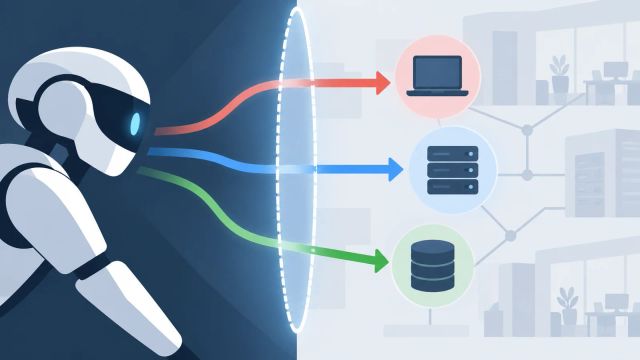
Google says Argon can find, validate and patch critical vulnerabilities. Trusted defenders and Google’s internal teams will receive it without cyber guardrails so they can use its full defensive capabilities. Wiz already uses Argon in its Scan for Good initiative, and Google says the model found a critical vulnerability in healthcare software that earlier frontier models missed.
For broader release, Google says it is strengthening misuse safeguards, defenses against prompt injection and monitoring that can stop actions outside a user’s intentions. A builder evaluating the eventual public model should check which capabilities and controls apply to that version, since the initial defenders receive different access terms.
Sources
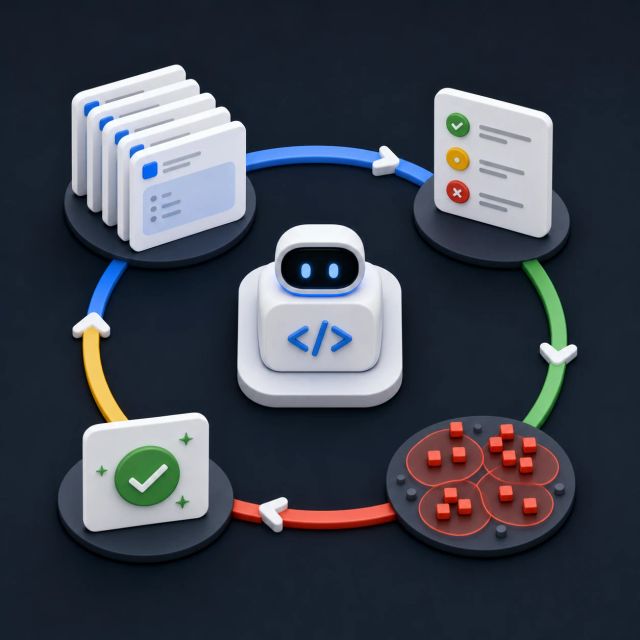
- Google: Gemini 4 Argon: our next era of frontier intelligence, source of the benchmark table and lead artwork. Image credit: Google.
- TechCrunch: Google releases Gemini 4 Argon, called its most powerful model yet