Hugging Face has published a practical integration path for Nunchaku 4-bit diffusion inference inside Diffusers, lowering the amount of specialized setup needed to run quantized diffusion checkpoints.
The July 23 post explains the problem plainly: large diffusion transformers often need roughly 20 GB to 30 GB of VRAM when loaded in BF16 precision. Quantization can reduce memory, but many backends store weights in low precision and dequantize them back to higher precision during compute, which may reduce memory without making inference faster.
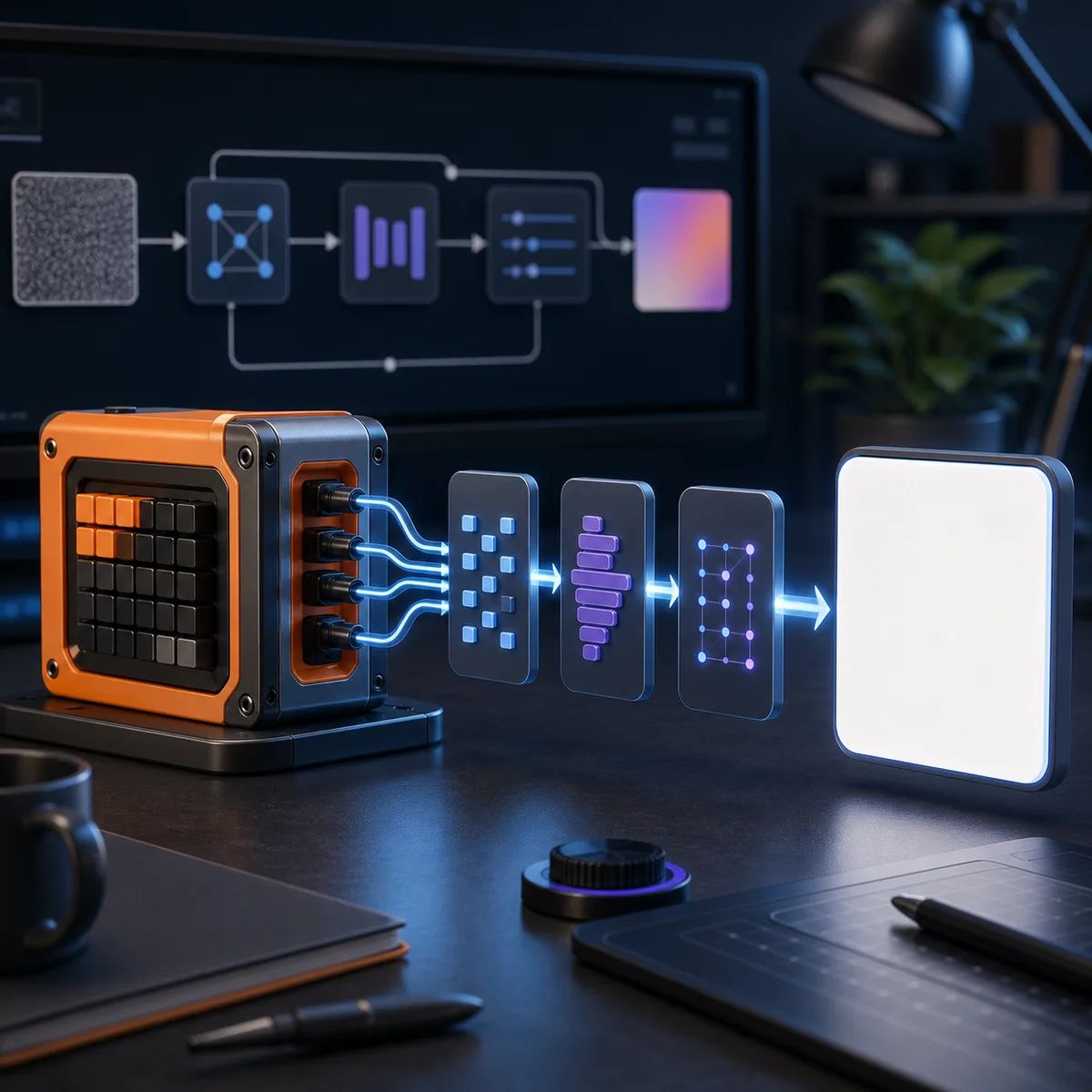
Nunchaku’s approach is based on SVDQuant. Hugging Face says it runs the main transformer layers with 4-bit weights and activations, reducing memory while speeding up the denoising loop. The practical update is that current Diffusers can load a Nunchaku checkpoint through from_pretrained(), without local CUDA compilation, using the Hugging Face kernels package.
Familiar loading is the product change
Inference improvements are valuable, but adoption often depends on how much workflow friction is removed.
Before this integration path, using these checkpoints required a separate inference library. Hugging Face says Diffusers can now load Nunchaku checkpoints more like regular Diffusers repositories. The companion diffuse-compressor toolkit is also positioned as a way to quantize new architectures and publish them as Diffusers repositories.
That packaging matters for builders who already use Diffusers for experiments, demos, internal tools, or production image workflows. A speed or memory technique is easier to evaluate when it fits into the same model-loading, pipeline, and Hub distribution habits the team already understands.
The useful claim is memory behavior
The strongest reason to track this update is access. If a modern text-to-image model needs 20 GB to 30 GB of VRAM in BF16, many consumer GPUs and smaller workstations are excluded. A 4-bit inference path can make local experimentation more realistic, especially for teams that do not want every image-generation test to run on remote infrastructure.
The post includes installation and loading examples, benchmark sections, and instructions for quantizing a model. It also points to ready-to-use checkpoints, including a Nunchaku Lite NVFP4 Krea 2 Turbo checkpoint mentioned on the article page.
As always with quantization, readers should test their own workload. Lower memory use, faster denoising, image quality, kernel support, model architecture, GPU type, and pipeline features can interact in surprising ways. The news is that more of that testing can now happen inside the Diffusers ecosystem.