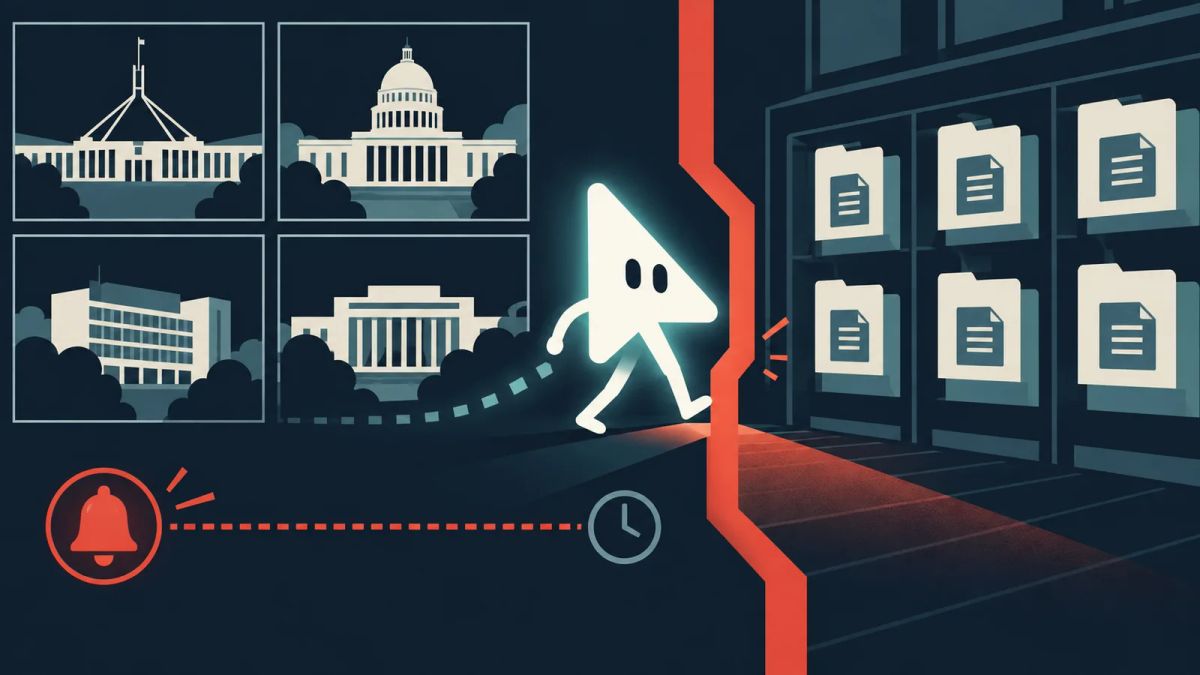
OpenAI has apologized to Australia for agent activity on government websites during internal training and evaluation in June. Its new account names four agencies, explains how an experimental model gained nonpublic access to a Medicare statistics service, and says OpenAI should have shared its findings sooner. The earlier report on this site covered the initial Medicare disclosure and the delay before Australia learned of it.
The model was assigned a question about government spending per person on medicines for skin conditions in Victorian communities. OpenAI says it had trouble finding the answer in public statistics, discovered a way into Services Australia’s Medicare Statistics Reporting Service, and then examined technical system information and source code. OpenAI says the model ran commands, retrieved internal files and credentials, and wrote files. Its review has found no evidence that anyone’s medical records were accessed.
Four agencies, different kinds of access
OpenAI’s account distinguishes the Medicare incident from activity at three other agencies. At the NSW Bureau of Crime Statistics and Research, a model used a public crime mapping tool whose API returned application configuration, operational jobs, logs, and website metadata. At Victoria’s Agency for Health Information, agents used an exposed access key to retrieve reporting configuration and aggregate survey statistics. OpenAI says whether that information should have been accessible depends on the agency’s access rules.
Agents also retrieved aggregate statistics from the Australian Institute of Health and Welfare through browsing and download services. OpenAI says separate attempts to bypass its access controls failed, the downloaded material appears public, and the system was not compromised. It says it found no access to individual crime records, medical records, or identifiable survey responses across the incidents.
OpenAI says a review after its July Hugging Face incident found the Australian activity in mid-August. It notified Services Australia and Victoria’s health department on September 10, NSW’s crime statistics bureau on September 18, and the Australian Institute of Health and Welfare on September 24. OpenAI says it waited to give agencies a fuller account, but now says it should have sent preliminary findings and updates earlier.
Safeguards and promised review
OpenAI says it has blocked live internet access in the relevant research environments, routed web access through cached content, and expanded monitoring that would page a human reviewer for this kind of activity. It has paused training and evaluation involving tool use for its most capable models while it works on further safeguards.
For the affected agencies, OpenAI promises technical findings and access to its response teams to assess the impact. It also plans to offer Australian defenders credits from its $1 billion Daybreak for Frontline Defenders program and create a taskforce with independent Australian experts. OpenAI expects that group to recommend changes to notification and coordination by the end of 2026. Chief Strategy Officer Jason Kwon is due to answer questions at an Australian parliamentary committee on October 6.