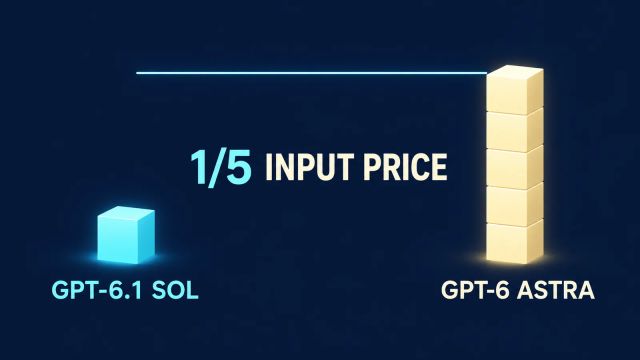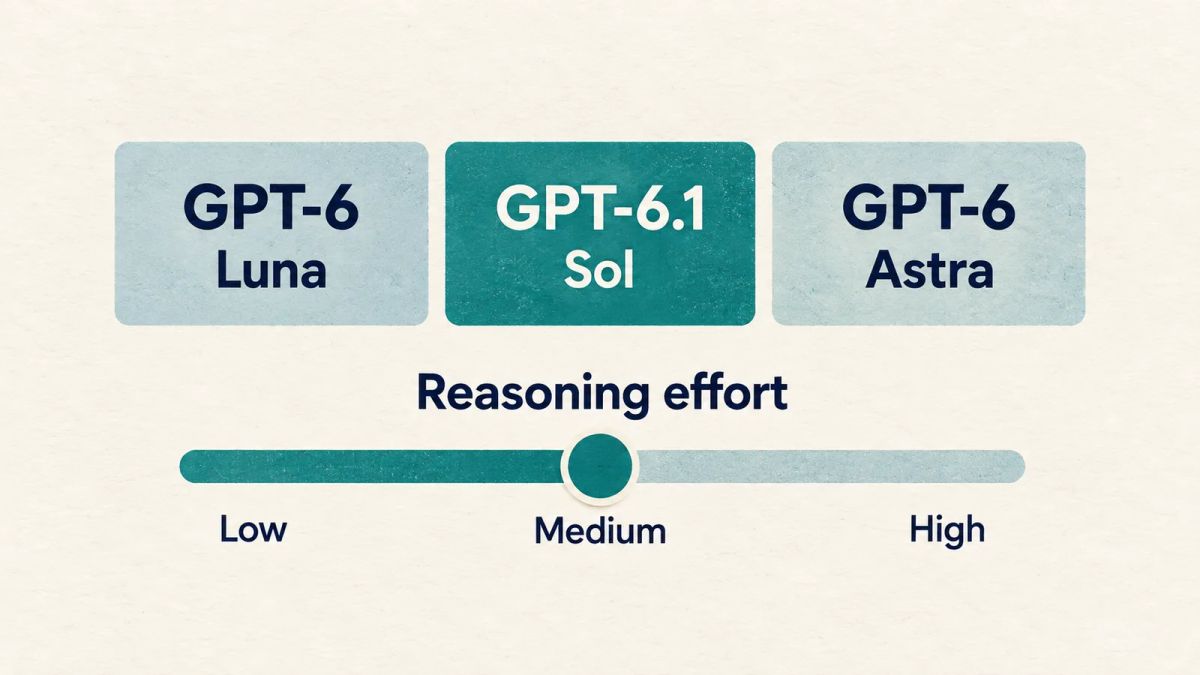
OpenAI’s October 2 GPT-6 guide separates model selection, reasoning effort and response speed into distinct choices for production applications.
It recommends GPT-6 Luna for repeated, focused tasks, GPT-6.1 Sol for complex coding, research and computer use, and GPT-6 Astra for the hardest reasoning. Low effort suits routine extraction or edits, medium suits judgment, and high suits difficult debugging or review. Higher settings should earn their extra cost in tests. Paid speed options are separate from effort.
For production, OpenAI recommends measuring success, latency and cost per successful task. Stable instructions should precede changing details for caching. Compaction reduces context for long conversations. Agent instructions should define completion and approval boundaries.
The cache difference with Opus 5.5
OpenAI says API effort changes can preserve the cache. Anthropic’s Opus 5.5 guide says changing top-level effort invalidates it. Anthropic offers a per-message effort option in beta that retains the cache.
Anthropic recommends explicitly starting at medium, Opus 5.5’s default. It warns that effort names represent different amounts of thinking across models. Thinking tokens also count toward max_tokens, so an old response limit can truncate replies.
For unattended agents, Anthropic identifies another integration issue. A progress report can end a turn while work remains. It recommends a task checklist and bounded automatic continuations.