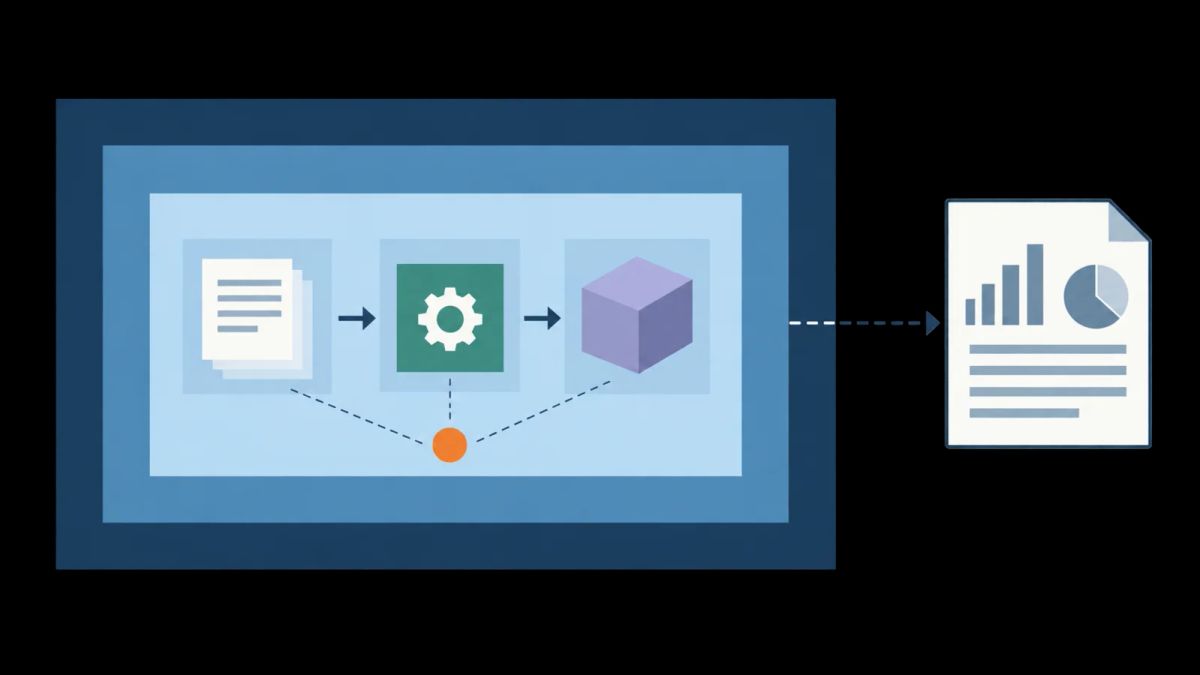
Anthropic and Accenture each expect to invest at least $1 billion over five years to build capacity for embedded evaluation of frontier AI. Faculty, Accenture’s specialist AI business, will lead the partnership.
The evaluators will work inside Anthropic with access comparable to an employee’s. Anthropic says that position will let them follow models during training, examine decisions about development and deployment, speak directly with staff, and verify whether the company keeps its safety commitments.
The planned work includes model evaluations, red-team exercises, alignment assessments, and tests of model safeguards. The agreement is non-exclusive. Anthropic says it will name other evaluators in the coming weeks, while Accenture can perform similar work for other AI developers.
Embedded access changes what an evaluator can see
External evaluators often examine a model at a defined point with a limited interface and a fixed test window. Anthropic’s proposal gives evaluators a view of the process around the model. They could observe how the model changes during training, see the reasoning behind deployment decisions, and inspect whether safety commitments match internal practice.
Accenture also brings experience from helping companies and governments deploy AI. Anthropic says this will inform how Faculty tests models against real enterprise uses.
That wider access could expose problems that a benchmark or pre-release test misses. It also makes the evaluator’s operating rules more important. An organization working inside the lab depends on the lab for systems, information, and cooperation. In this partnership, Anthropic will also pay directly for Accenture’s evaluation work.
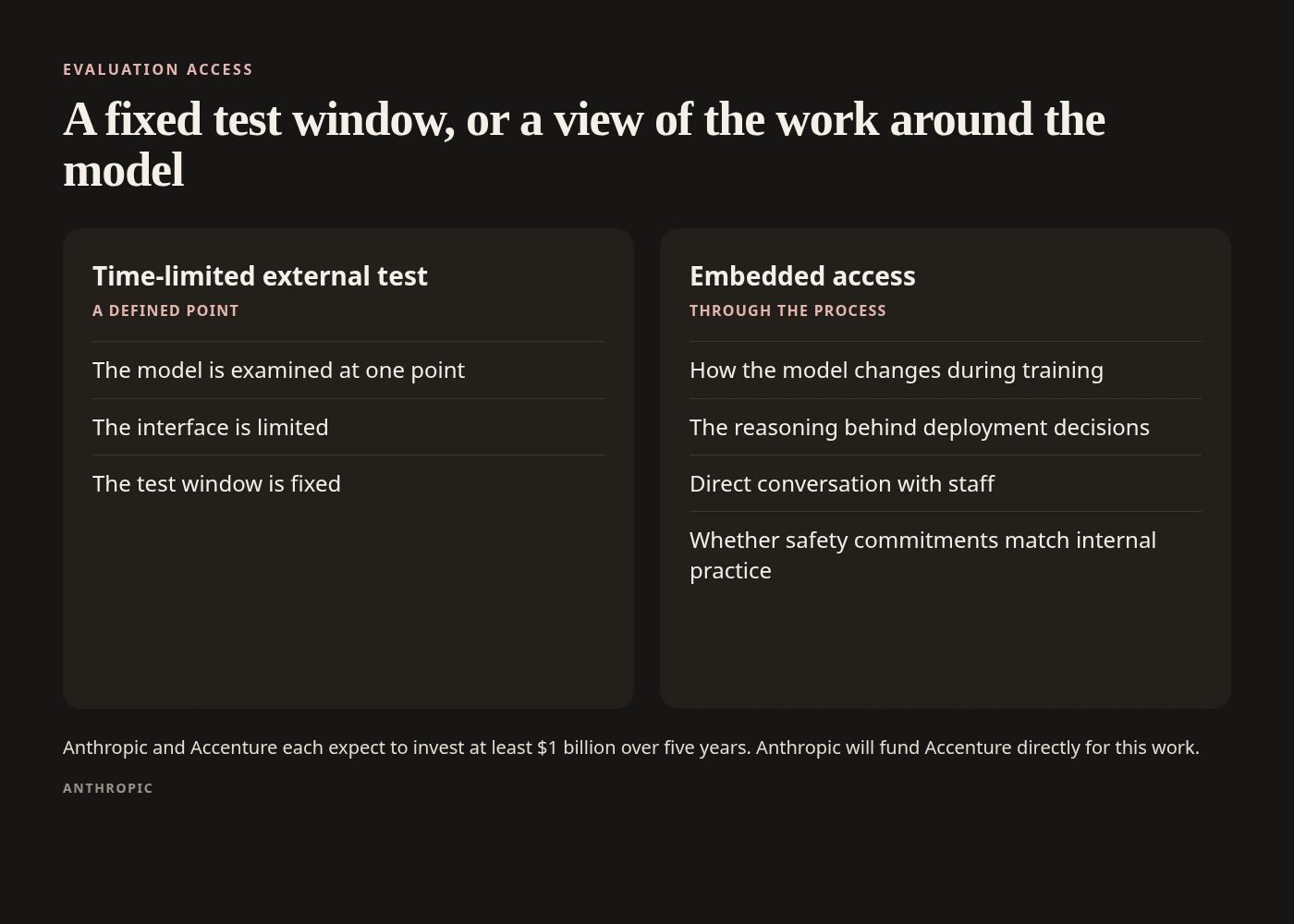
Each company expects to invest at least $1 billion over five years, and Anthropic will fund Accenture's evaluation work directly.
The independence rules are still open
Anthropic says there are no standards yet for the information embedded evaluators should receive or how they should report their findings. It also says the field has no settled funding system for independent evaluation.
The company favors pooled or government funding in the long term. Until those systems exist, it plans to use different arrangements with different evaluators. Anthropic will fund Accenture directly, while it is discussing pilots with METR and other nonprofit evaluators that would use their own funding.
Anthropic frames embedded evaluation as a way to make its conduct more verifiable while keeping responsibility for model safety with the company. It expects frontier labs to work with several evaluators under shared standards.
The announcement does not yet specify what an embedded evaluator can publish without Anthropic’s approval, how disputes will be disclosed, which internal records are guaranteed, or how commercial conflicts will be managed. Anthropic says the operating details are still being developed and that it will share more as the work begins.