Reuters reports that China is increasing scrutiny around exports of indium, a niche metal tied to high-speed optical chips used in next-generation AI data centers. The report does not say China has blocked indium metal shipments. It says buyers are seeing more scrutiny, and that the industry is worried this could become a tighter control point.
That distinction matters. This is not a story about an immediate AI infrastructure shutdown. It is a warning about the material layer underneath data-center expansion. AI capacity depends on GPUs and power, but it also depends on optics, networking, packaging, specialty chemicals, and export paperwork that most model announcements never mention.
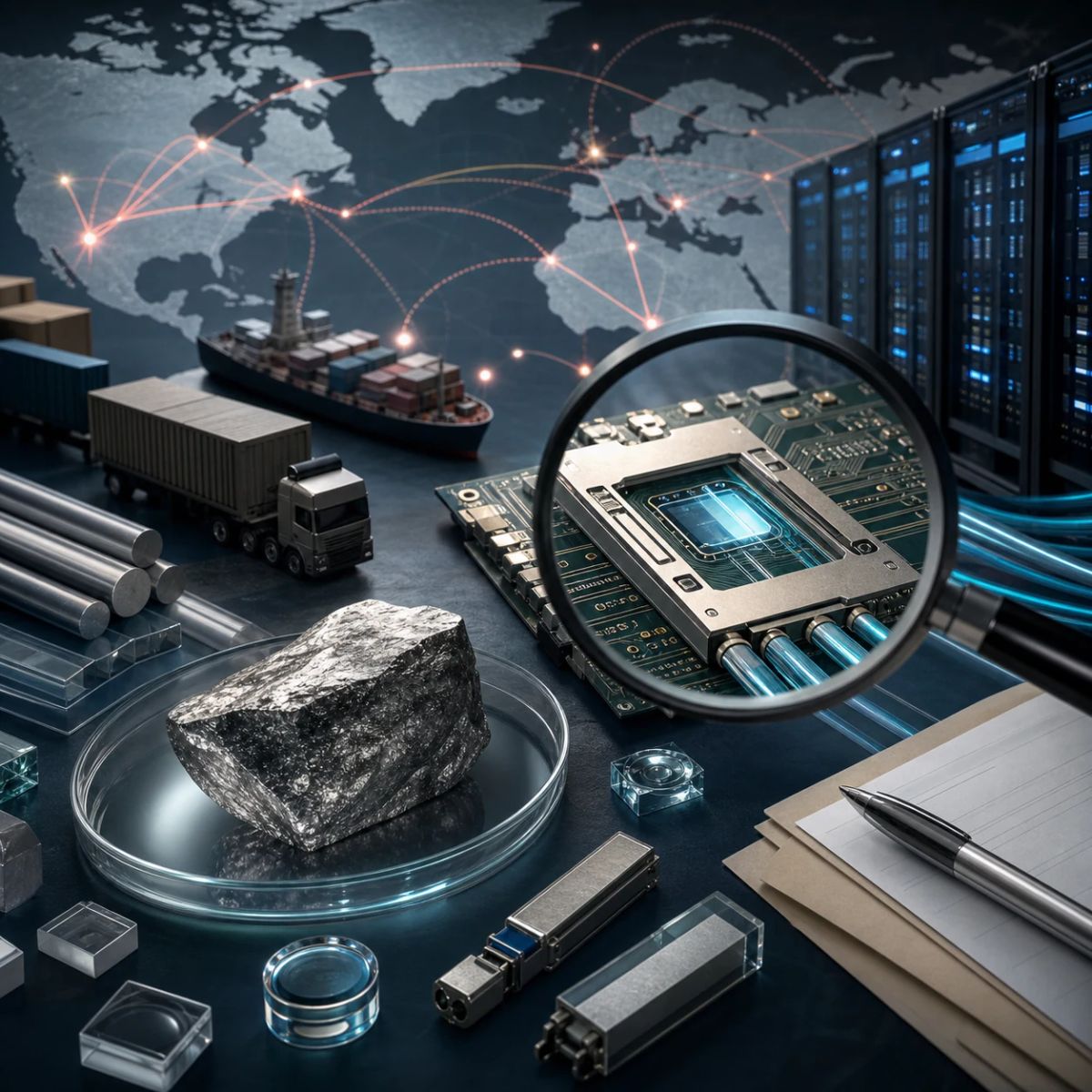
Reuters, republished by The Business Standard, says China produces nearly 70% of the world’s indium. Indium is mostly used in displays and solder, but it is also the raw material for indium phosphide, which is used to make high-speed optical chips for AI data centers.
The concern is paperwork before blockage
The reported change is scrutiny, not a formal ban on indium metal. Reuters says Beijing put indium phosphide on an export control list in February 2025. It also reports that two buyers described growing scrutiny over purchases from Chinese customs, including a European buyer asked to disclose end-user information for the first time this year.
A major North American buyer told Reuters approvals had moved from same-day to several days, which the buyer attributed to more scrutiny of paperwork. Reuters also says it had not identified any blocked shipments.
That is a narrow claim, but it is still relevant. Export-control pressure often matters before shipments stop. Extra disclosures, longer approvals, and uncertainty can make buyers rethink inventory, suppliers, and qualification timelines.
For AI data-center builders, the risk is not only whether one material is available today. It is whether the supply chain can support aggressive buildout schedules when several constrained inputs become political or administrative chokepoints at the same time.
AI infrastructure is more than GPUs
The public AI-infrastructure debate tends to focus on GPU supply, electricity, water, and data-center permits. Those are the visible constraints. Optical networking is less visible but critical because large AI clusters require high-bandwidth movement of data between accelerators, racks, and facilities.
Indium phosphide is important because it can be used in high-speed optical components. If demand for AI data centers increases demand for those components, then indium supply and export rules become part of the AI buildout story.
This does not mean every AI data center is immediately exposed to indium disruption. Supply chains have substitutions, inventories, contracts, and different component designs. The point is narrower: the material inputs for AI networking are now important enough to appear in trade-control reporting.
That should make infrastructure analysis more specific. “More compute” is not a single procurement line. It is chips, optics, power equipment, cooling, land, grid connections, software, labor, and geopolitical risk.
The strategic signal is supply-chain mapping
Reuters reports that some buyers worry end-user disclosures could help China chart global supply chains and chokepoints. That is a reasonable concern in any export-control regime. If a government can see where controlled or scrutinized materials are going, it can understand which sectors, companies, and countries depend on them.
For AI companies and cloud providers, that makes supplier visibility a strategic issue. A model lab may not buy indium directly, but its capacity plans can still depend on suppliers who do. A cloud provider may have long-term GPU commitments while still needing optical components and networking systems on schedule.
The practical question is whether buyers have enough redundancy before a niche input becomes a bottleneck. That includes second sources, inventory policy, alternative component designs, and a clear view of where export approvals are required.