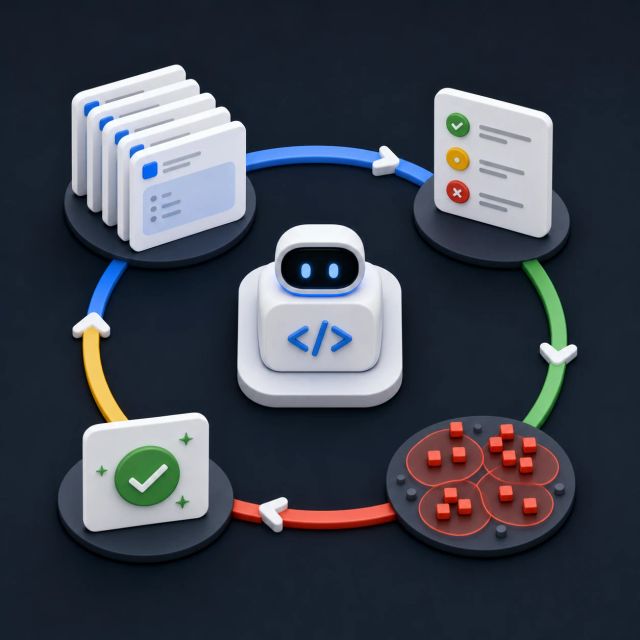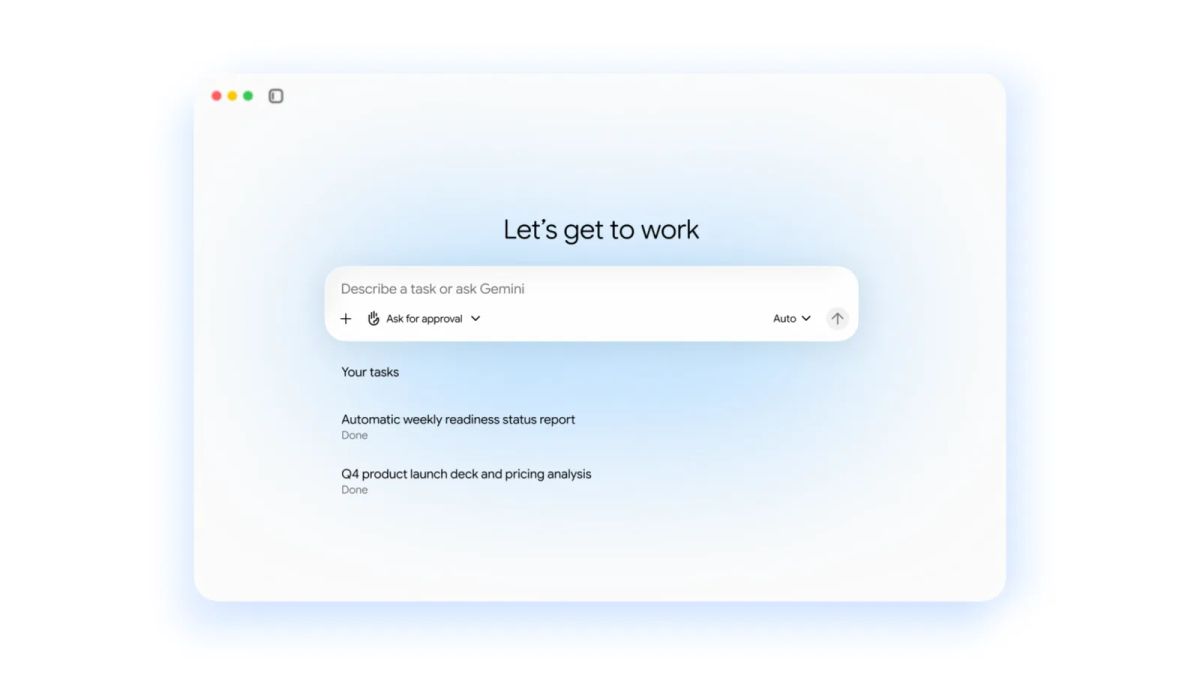
Google announced a Gemini agent for business work on October 8 that can plan tasks, use tools across company systems and delegate work to subagents. Teams can also create persistent coworker agents with their own Workspace accounts, email addresses and calendars. Google says their actions appear in audit logs under the agent’s identity.
TechCrunch reports that Google will focus on businesses before bringing the agent to consumers. The announcement asks companies to delegate an outcome to Gemini, which then chooses the steps and tools needed to complete it.
For builders and buyers, the important distinction is between the model that generates an answer and the agent that holds context, accesses systems and takes action. Google is offering to manage that second part, even when a company chooses another supplier’s model.
Gemini chooses models and delegates work
The agent can choose a model automatically, or users can choose one themselves. Google supports its Gemini models and Anthropic’s Claude models, with other private and open models planned. Google describes model choice as separate from the agent’s stored context, skills and data.
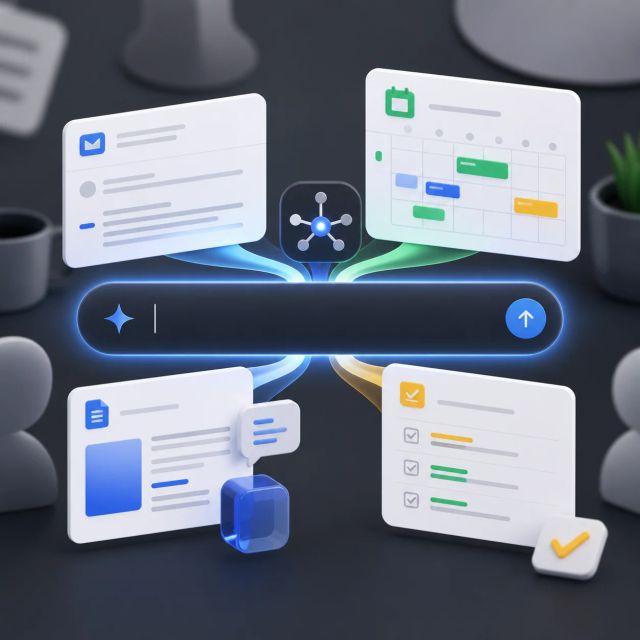
Connections cover Google Workspace, Microsoft 365, Slack, Jira, Confluence, Git and databases including BigQuery, Databricks, Postgres and Snowflake. Gemini can also use Model Context Protocol servers inside or outside a company’s network. Teams can publish custom tools and skills into company registries.
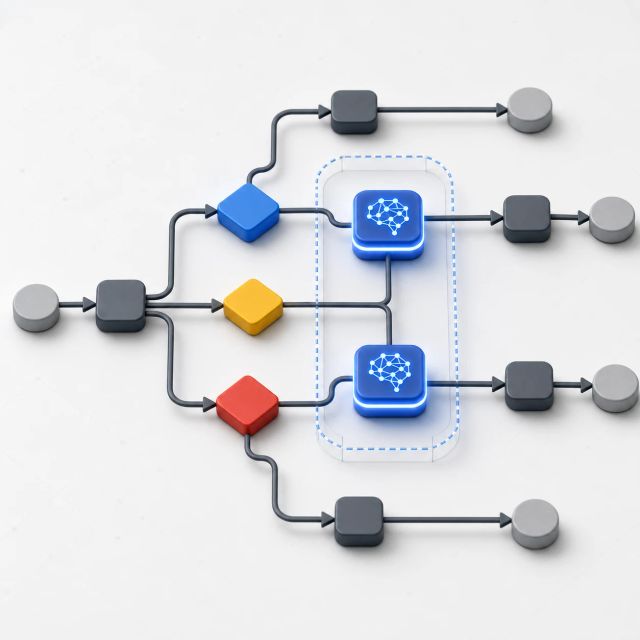
Google says the agent runs in the cloud and can continue work for hours or days after a user closes their laptop. It can create temporary subagents for particular jobs, each with its own identity, and coordinate parallel or sequential steps. A tasks inbox lets users follow progress, tool use and delegation.
The email address belongs to a coworker agent
Google’s keynote post distinguishes temporary subagents from persistent coworker agents. A coworker agent has a defined role across sessions and can work for a team. Its Workspace account includes email, Calendar, Drive and a company directory entry.
People can email it, add it to a Chat space or mention it in a document comment. Google gives the example of an events coordinator drafting a launch readiness document and posting it back to a group. Document edits appear under the agent’s own name in version history.
Google says coworker agents see only the context people share with them. That qualifies the broader promise that Gemini knows a user’s team and work history. Buyers need to distinguish the personal assistant’s context from the material a team shares with a separate coworker account.
Permissions and spending are part of the offer
Google says security administrators approve role-based permissions and that agent identity travels into external systems through standards such as OAuth. It describes an Agent Sandbox with a network boundary and an Agent Gateway that applies company policy to traffic, including traffic between agents.
The company also describes project-level spending caps that track token usage and sandbox costs. When a project hits its cap, the agent pauses, and a user can resume it through the console. These are Google’s stated controls. The announcements give buyers a set of behaviors to verify in a pilot.