Hark released Hark Pro on October 6. TechCrunch places it alongside Muse, Dots and Instinct in the personal-assistant race.
Hark’s product page describes an assistant with persistent memory and a computer-use agent called Handoff. The privacy question follows from how much access the product asks users to give it.
An agent with its own browser
Hark says Handoff works from a dedicated computer with a full browser for each user. Its listed tasks include research, placing orders, building websites and making slides. Hark Pro is available through a browser and apps for iOS and Android.
The chat keeps a single thread, while Projects organize larger tasks such as a job search or trip. Hark says its memory helps tailor responses. Suggested Action Buttons let users start tasks the assistant has identified and prioritized.
Users can also describe a dashboard they want, and Hark builds a small app it calls a Panel. The company names Strava, Spotify and Venmo as services whose data users can explore through Panels.
What Hark says about security
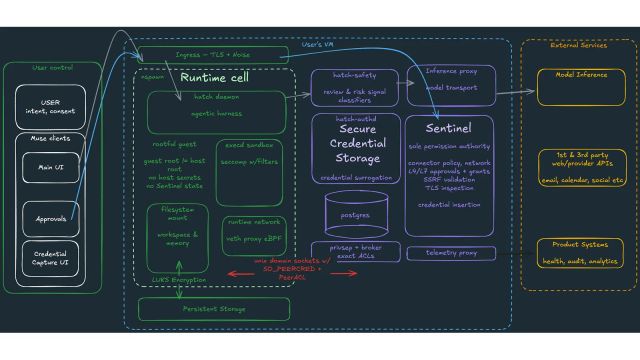
Hark calls its security system “Secured by hark” and says it has end-to-end encryption. The page discusses connected accounts, saved logins and payments, and describes a vault that no person can access. It also says Hark asks before an action that requires approval.
Those statements make encryption and approval controls part of the product’s pitch. The page leaves the scope of both unclear, including which actions require approval and how the assistant processes information from connected accounts.