Instinct, a private-beta personal AI assistant operated by Spear Street Technology, has reportedly raised a $250 million Series B at a $2.5 billion valuation.
TechCrunch, citing The Wall Street Journal, reported that the new round brings total funding to $350 million and is co-led by Index Ventures and Benchmark. The company is led by Noah Shinn and offers an assistant that users can reach by text message or phone call to handle everyday tasks across connected apps and devices.
The funding is notable because it arrived while the product was still private and while early users were raising concerns about permissions, retained email data, and actions taken through connected accounts. That combination makes Instinct a useful test case for consumer agents: investors are funding capability before the trust model is proven at public scale.
The product pitch is delegation, not chat
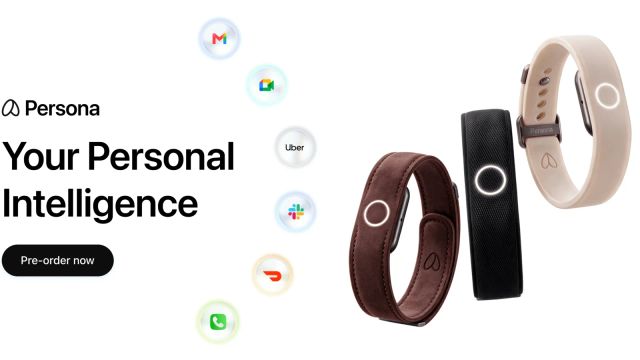
Instinct is not positioned as another chatbot window. TechCrunch describes it as an assistant that connects to user apps and devices, then carries out tasks such as organizing a person’s life, managing messages, booking services, and coordinating purchases.
That is why the valuation story matters. Consumer agents become more valuable as they gain more context and more authority. But the same design creates higher trust requirements. Email, calendars, messaging accounts, shopping sites, travel systems, and payment flows are sensitive by default.
The market is betting that users will trade access for convenience if the assistant works well enough. The early privacy backlash shows the limit of that assumption.
Early concerns centered on control
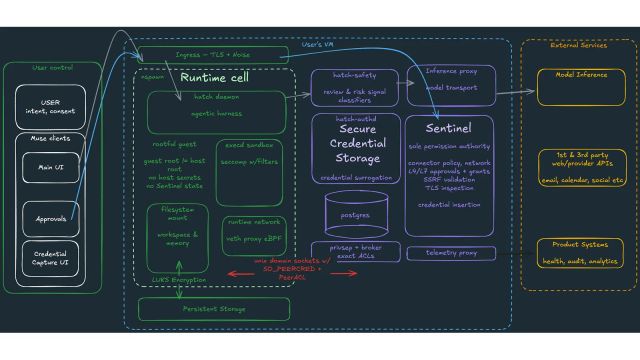
TechCrunch’s earlier privacy report documented concerns from testers about broad permissions, data retention, and the agent’s ability to act through connected accounts. The article described users questioning whether Instinct retained email records, whether disconnecting an account stopped downstream summaries, and whether an assistant could be phished through messages it reads.
Those are not abstract AI-safety concerns. They are normal security and product-governance issues made sharper by automation. If a personal agent can read messages, extract codes, make reservations, draft replies, or make purchases, then consent, logging, approvals, revocation, and deletion become product features rather than policy footnotes.
The company was still in private beta during the reporting, so public evidence remains limited. That makes the funding round more striking, not less.
The category is moving faster than norms
Personal agents have a simple promise: let software do the annoying work that lives across apps. The problem is that the work usually requires the most sensitive data a person has.
That creates a category-wide question for Instinct, OpenClaw-style projects, Grok Bot, ChatGPT Work agents, and similar systems. How much agency should a user hand over before the product has strong guarantees for permissions, data minimization, approval prompts, account revocation, and audit trails?