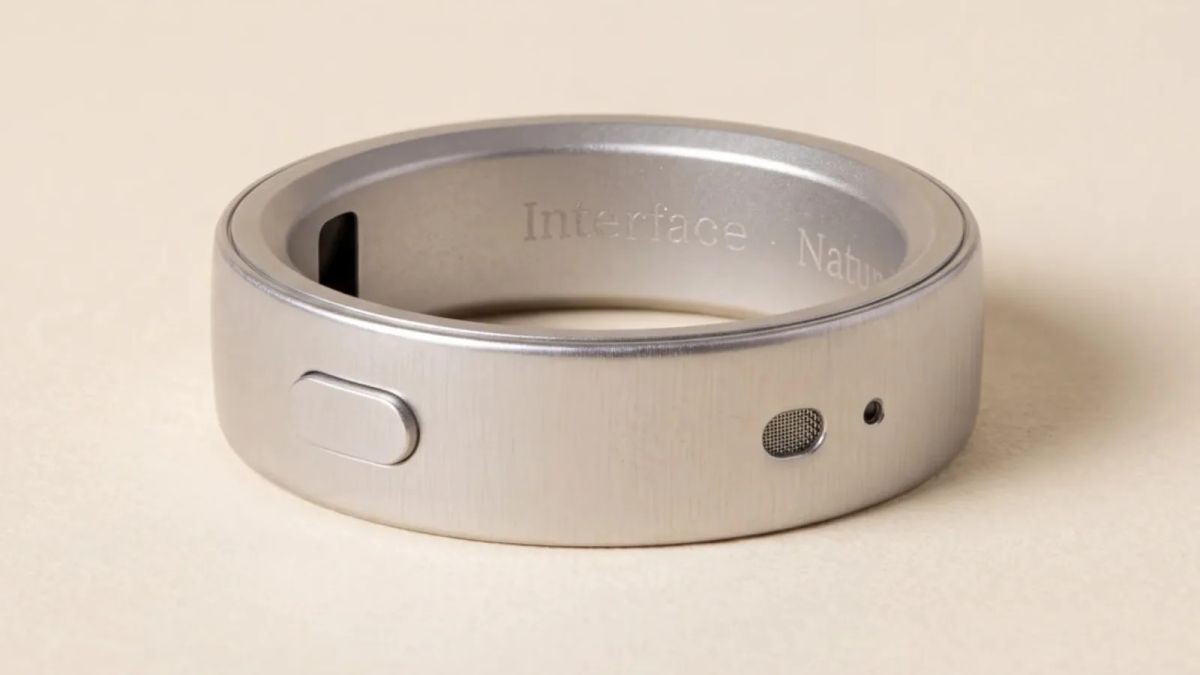
Natura plans to launch Interface, a $99 smart ring that lets users press a finger to request help from AI agents, capture thoughts and control devices. The ring also tracks health metrics. TechCrunch reports that preorders are expected in November, with shipping planned for December 2026 or January 2027.
The price comes with a planned subscription. Natura intends to charge $9 a month after a free period of three to six months, and says it will eventually raise the hardware price. Buyers will need to judge both the convenience of voice access and the ongoing cost of using it.
One button, several agents
Natura says Interface will connect at launch to agents and apps including Meta’s Muse, Instinct, Grok Bot, Claude and ChatGPT. Users can name the agent they want to handle a request, such as asking Claude to write code or Instinct to book a reservation.
The company’s examples include starting workout tracking during a run, asking for the day’s schedule and reordering shampoo. It also describes recording a meeting and asking an agent to send the notes to a co-worker. Device-control examples include turning off a television and setting an alarm.
Responses can arrive through connected headphones, an iPhone Live Activity or the NatureOS app. Those options describe how users receive an answer. The report leaves open how they review an order or outgoing message before an agent completes it.
Founder Carlo Edoardo Ferraris previously founded tech accessories company Rolling Square. Natura’s earlier product, HumanPods, used AI-enabled earbuds to give people access to agents. Ferraris told TechCrunch that the ring is intended to make that access available throughout the day, including when users sleep or shower.
His longer-term ambition is to handle computer tasks through voice requests, including filling out forms, finding files and drafting presentations. That is his forecast for how people will use agents as adoption grows.
Health tracking shares the battery
Natura says Interface tracks heart rate, resting heart rate, heart rate variability, sleep stages, movement, steps and changes in skin temperature. It claims six to 12 days of battery life depending on usage, with a full recharge taking 100 minutes.
The range matters for a device intended to combine sleep tracking with voice requests and meeting recordings. TechCrunch reports the company’s battery claim, but supplies no measured runtime for those activities or independent assessment of health-tracking accuracy.