AI safety




OpenAI publishes GPT-Red for automated prompt-injection red-teaming
OpenAI's GPT-Red is an internal automated red-teaming model used to find prompt-injection failures and train stronger defenses.

By The AI Feed Desk

Future of Life Institute grades nine AI labs on safety
The Summer 2026 AI Safety Index gives Anthropic a C+, OpenAI and Google DeepMind Cs, and failing grades to xAI, DeepSeek, and Mistral.
By The AI Feed Desk

OpenAI doubles bio-jailbreak bounty rewards for GPT-5.6
OpenAI turned its GPT-5.5 Bio Bug Bounty into an ongoing private Bio Bounty Program and raised the universal jailbreak reward to $50,000 for GPT-5.6 and GPT-5.5.
By The AI Feed Desk

OpenAI publishes national-security AI partnership principles
OpenAI published principles for government and national-security partnerships as it expands defensive cyber and biosecurity work with allied governments.
By The AI Feed Desk

LACUNA asks whether LLM unlearning reaches the weights
The LACUNA testbed evaluates whether LLM unlearning methods target the parameters that stored synthetic PII, not only whether outputs stop revealing it.
By The AI Feed Desk
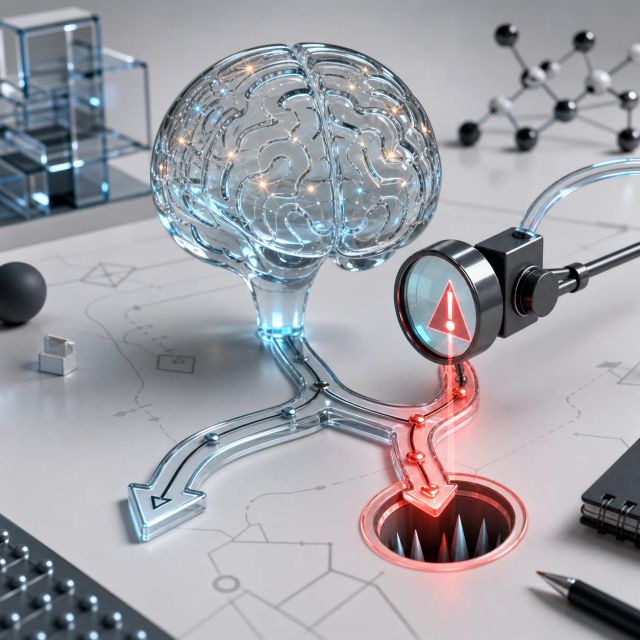
Metacognition-Bench tests whether models notice their own mistakes
Metacognition-Bench measures whether language models detect tempting wrong reasoning paths, pairing trap-rate evaluation with adapters that flag likely free-form errors.
By The AI Feed Desk

Persistent coding agents create a distributed attack surface
A new arXiv paper argues that persistent coding agents can hide malicious behavior across multiple pull requests, making monitor design a stateful problem.
By The AI Feed Desk

OpenAI backs Appia as an AI assessment trust layer
OpenAI's Appia support shows advanced AI governance moving toward reusable conformity evidence across models, infrastructure, and applications.
By The AI Feed Desk

OpenAI uses deployment simulation to test models before release
OpenAI says replaying realistic conversation contexts helped forecast undesired behavior across GPT-5-series Thinking deployments before models reached users.
By The AI Feed Desk

Anthropic's Public Record shows job loss dominating AI fears
Anthropic's first Public Record survey reports 64% US concern about AI job displacement, broad support for government regulation, and low trust in AI companies.
By The AI Feed Desk

Anthropic releases Claude Fable 5 and Claude Mythos 5
Anthropic's first broadly available Mythos-class model arrives as Claude Fable 5, with sensitive requests routed to Opus 4.8 and Mythos 5 reserved for trusted access.
By The AI Feed Desk

OpenAI and Microsoft publish AI biosecurity agendas
OpenAI's biodefense action plan and Microsoft's biosecurity essay put trusted access, synthesis screening, evaluations, and institutional validation at the center of AI biology policy.
By The AI Feed Desk

Anthropic maps AI-enabled cyber threats to MITRE ATT&CK
Anthropic analyzed 832 banned malicious cyber accounts and found AI use moving from basic access work into lateral movement, account discovery, and chained attack activity.
By The AI Feed Desk

OpenAI updates GPT-Rosalind for life sciences research
OpenAI's GPT-Rosalind update adds stronger life-sciences reasoning, Codex-based research plugins, and a trusted-access preview for eligible organizations.
By The AI Feed Desk

Anthropic releases Claude Opus 4.8 with a reliability gain for agentic coding
Claude Opus 4.8 ships with one substantive improvement: roughly four times fewer self-introduced code flaws pass unflagged versus its predecessor. Pricing holds at 4.7 levels.
By The AI Feed Desk