Airbnb has added AI search and home comparisons to its fall update, alongside a map of friends’ trips and more services for guests. CEO Brian Chesky wants outside AI agents to work with Airbnb too. In an interview with TechCrunch, he argued that the industry needs an operating system and developer tools that let agents retain the controls people use inside apps.
The two moves address different parts of travel planning. Airbnb’s released tools help people choose within its app. Chesky’s longer-term proposal concerns how an outside assistant could use Airbnb while preserving maps, host messages and identity checks.
What travelers can use
Airbnb says its new AI trip-planning tools start in the US. Travelers can search for homes, experiences and services in their own words or by voice. Keyword-based filters turn a request into more specific choices. A search for baby-related amenities, for example, can bring up filters for cribs or children’s books and toys.
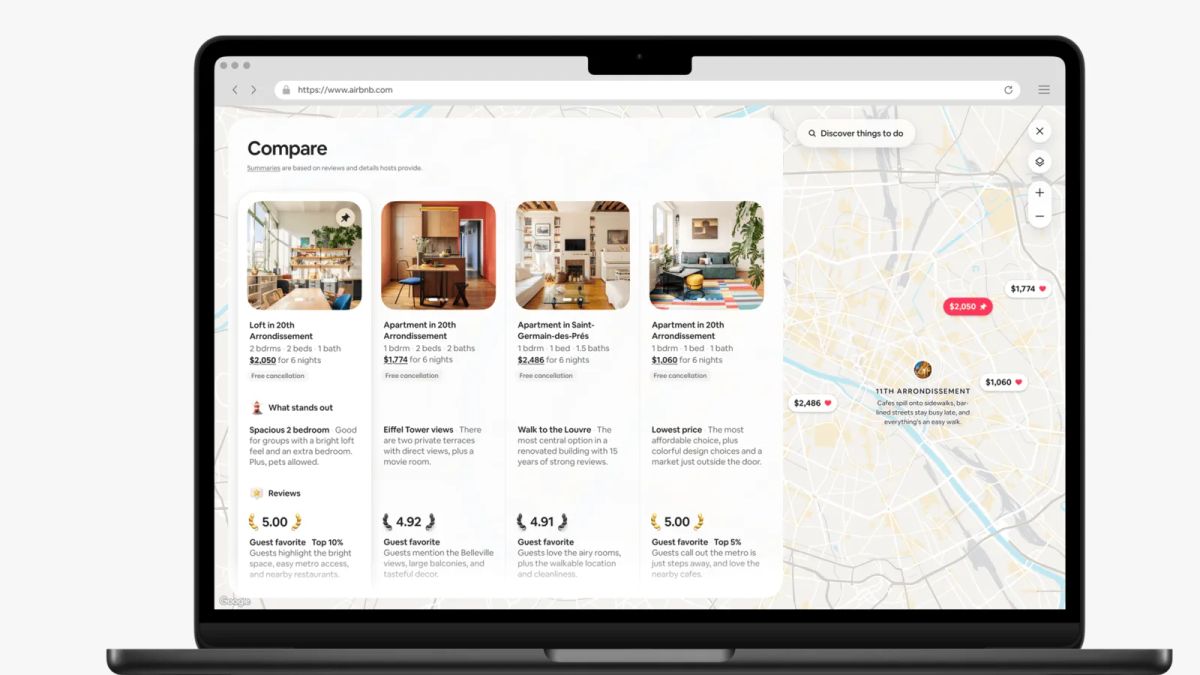
Search results include AI descriptions of homes. A side-by-side wishlist comparison uses AI summaries to help travelers compare properties. These tools keep listings and visual browsing part of the process.
The social update lets people connect with friends, family and past travel companions. A travel map shows connections’ past and upcoming trips, including where they stayed and what they booked. Users can choose what to share and hide trips. Airbnb is also adding neighborhood pages based on guest and host accounts and other sources.
New services have separate schedules and locations. Meal delivery is available in select European cities, and laundry pickup and delivery in select US cities. Airbnb says baby-gear rentals will start in November in more than 60 US cities. The announcement spans services available now and others due later this year.
Why Chesky wants richer agent interfaces
Chesky told TechCrunch that chatbots make browsing and shopping cumbersome because they present a few options at a time and require repeated exchanges. He also said their usual single-person design fits poorly with trips that families or friends plan together. Airbnb plans to explore interfaces for several people to use AI together over the next three to six months.
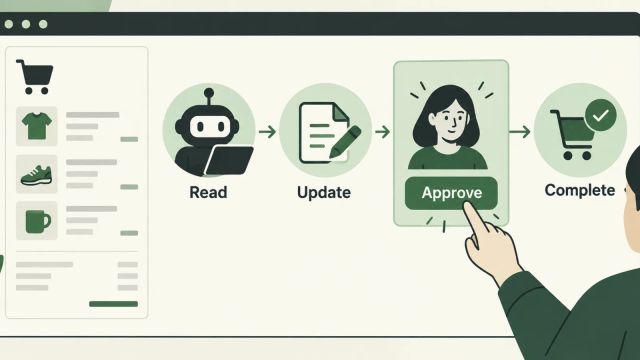
For outside agents, Chesky sees two possible ways to preserve Airbnb’s tools. An assistant could hand the traveler over to Airbnb, or its developer could use a richer software development kit to bring Airbnb’s controls into the assistant. He described messaging a host, comparing homes, verifying identity and using a map as functions that need to survive that transition.
He said Airbnb wants to become more agent-friendly and sees agents as potential sources of customers. He also described an eventual overarching Airbnb agent that could connect with other agents through MCP. That remains a direction he outlined in the interview.
His operating-system argument goes further. Chesky wants AI integrated into the core of an operating system, with apps able to act as interoperable agents. He said Apple, Google or another platform builder would need to create that foundation. He also said his own attempts to use Airbnb through Muse and Instinct had worked poorly. That is his account of using those tools, rather than a published comparative test.