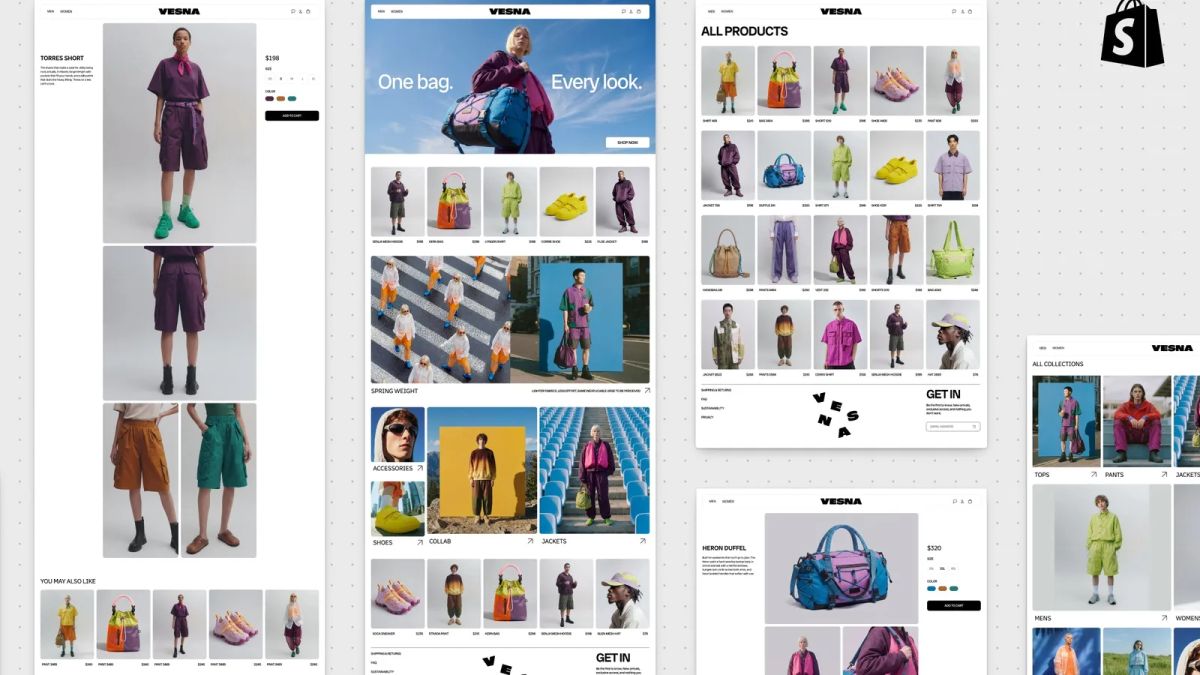
VESNA product, homepage and collection pages arranged side by side in Shopify's Canvas workspace
+ AI Agents News

Shopify's Canvas builds online stores through chat with Sidekick

Canvas lets merchants edit Shopify stores through Sidekick and test changes live. Its launch limits make theme and app compatibility the first checks before a switch.

Shopify introduced Canvas on October 1, letting merchants build and edit online stores by chatting with Sidekick, its AI agent. Changes appear in real time across a workspace where merchants can view pages together, pan between them and zoom into details.

Shopify says Canvas renders the store’s actual code. Merchants can test interactions and animations, and preview pages with different products and screen sizes. They can also click elements to edit them directly.

Sidekick works on the theme’s files, validates code and takes screenshots to inspect its changes. Shopify simplified the theme architecture to help the agent coordinate edits across the store. This extends Sidekick’s earlier work on apps and custom theme sections into a whole-store editing tool.

The launch has compatibility limits

Shopify’s changelog says merchants can create a theme in Canvas or duplicate a Shopify or custom theme into it. The original stays in the current editor. Shopify announced a rollout over the days following launch, alongside its existing editor.

At launch, Canvas excludes third-party Theme Store themes, Markets, translations, rollouts, app blocks and app embeds. Themes edited in Canvas do not receive theme updates. TechCrunch reports that Canvas is desktop-only.

Sources

The AI Feed Desk

The AI Feed Desk

Editorial desk

The AI Feed Desk tracks AI provider updates, model releases, agent tooling, and enterprise adoption, turning fast-moving announcements into source-linked context for builders and operators.

Noticed a typo, incorrect information, or translation error?

Tell us so we can fix it.

Help Improve This Article

Related Articles

Illustration of an agent reading and updating a checkout before a buyer approves the purchase

Shopify lets browser-based AI agents complete checkout with buyer authorization

Shopify's WebMCP checkout tools let browser agents read and update a buyer's checkout, then place an order after approval. The tools have limits, and some steps still require the buyer.

The AI Feed Desk

By The AI Feed Desk

A closed boundary separates a shopping assistant symbol from a checkout terminal; illustration

Amazon blocks Meta's Muse shopping agent from buying on its site

Amazon says Meta's Muse is an unauthorized AI agent, exposing the access and order-recovery rules that shopping agents need beyond product browsing.

The AI Feed Desk

By The AI Feed Desk

Laptop screen showing four Airbnb homes compared side by side with AI summaries beside a Paris map

Airbnb adds AI search and social features as Chesky calls for an agent operating system

Airbnb adds natural-language search and home comparisons. Chesky's agent vision raises a separate test: preserving the booking tools travelers need.

The AI Feed Desk

By The AI Feed Desk

An enterprise procurement workflow moves from invoices through contract review to a human approval gate

xAI says Grok Bot found over $100,000 in procurement savings

xAI's Grok Bot procurement case study claims direct savings from SaaS seat audits, contract review, and recurring purchase comparison.

The AI Feed Desk

By The AI Feed Desk

A modular tool arm stands behind green, amber, and red translucent permission gates

GitHub adds enterprise-managed permissions for Copilot agent operations

GitHub now lets Copilot Business and Enterprise administrators centrally block, require approval for, or permit agent shell, file, and network operations.

The AI Feed Desk

By The AI Feed Desk