NVIDIA and Anthropic published sharply different but overlapping open-weight AI positions on July 27, turning the open-model debate into a practical fight over cybersecurity, frontier risk, and policy design.
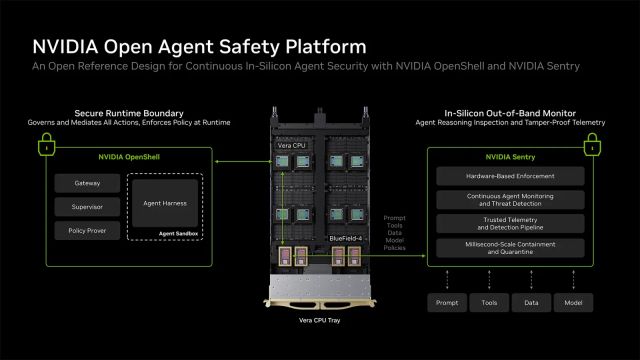
NVIDIA launched the Open Secure AI Alliance, a coalition meant to build and share open technologies for responsible AI and security. The company frames open models, harnesses, and tools as defensive infrastructure that security teams can inspect, adapt, and run under their own controls.
Anthropic CEO Dario Amodei, writing the same day, said Anthropic has never advocated for a blanket ban on open-weight models. He also argued that the real policy focus should be powerful chips, industrial-scale distillation, and mandatory safety testing for sufficiently capable models.
The disagreement is about where risk is controlled
NVIDIA’s post argues that cyber defenders need open frontier tools because closed systems can create single points of failure. It cites the July Hugging Face security incident as an example: Hugging Face used an open-weight model on its own infrastructure to analyze more than 17,000 actions after closed tools blocked forensic analysis.
The alliance partner list is broad. NVIDIA names cloud, cybersecurity, enterprise software, open-source, and AI research participants, including Cloudflare, CrowdStrike, Databricks, Dell Technologies, Hugging Face, IBM, LangChain, Linux Foundation, Microsoft, Palantir, Palo Alto Networks, Red Hat, Salesforce, SAP, ServiceNow, Snowflake, SpaceXAI, and Thinking Machines Lab.
Anthropic agrees with part of the open-weights case. Its post says open-weight models without dangerous capabilities are a public good and that a blanket ban would protect U.S. AI companies from competition without addressing the hardest security risks. But Anthropic does not accept the stronger claim that open weights necessarily make defenders safer than attackers.
The policy split is narrower than it looks
The useful read is not that NVIDIA is “pro safety” and Anthropic is “anti openness,” or the reverse. Both posts argue for controls. They disagree about which layer carries the most risk.
NVIDIA wants policy to treat open models, harnesses, and security tooling as defensive assets. Its proposed stack includes open models, model weights, data, and the NVIDIA Labs Object-Oriented Agent project for testing, tracing, auditing, and governing agent behavior.
Anthropic wants controls at choke points before or around the most capable systems. Its list is direct: keep powerful chips and chipmaking equipment out of authoritarian hands, deter industrial-scale distillation operations, and require safety testing for all sufficiently capable models, open and closed.
That makes the current open-weight fight less like a simple access debate and more like a market-structure question. The companies that sell infrastructure, tooling, and deployment layers have a strong reason to preserve open model choice. Closed frontier labs have a strong reason to emphasize risks that cannot be repaired once weights are released.