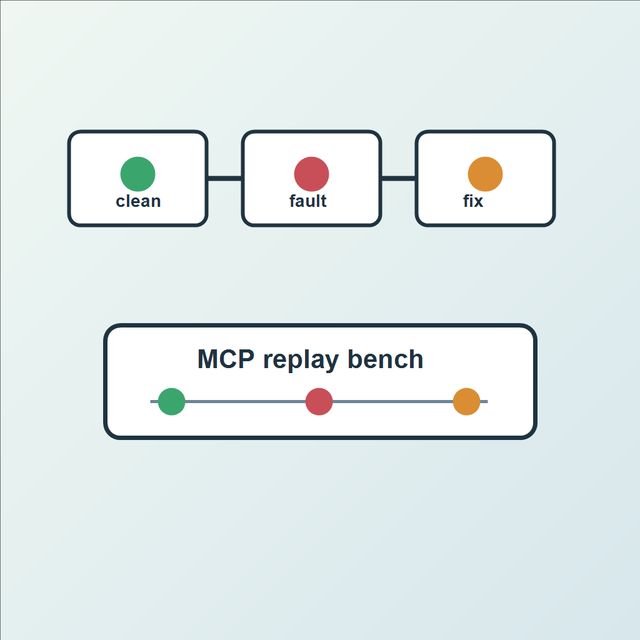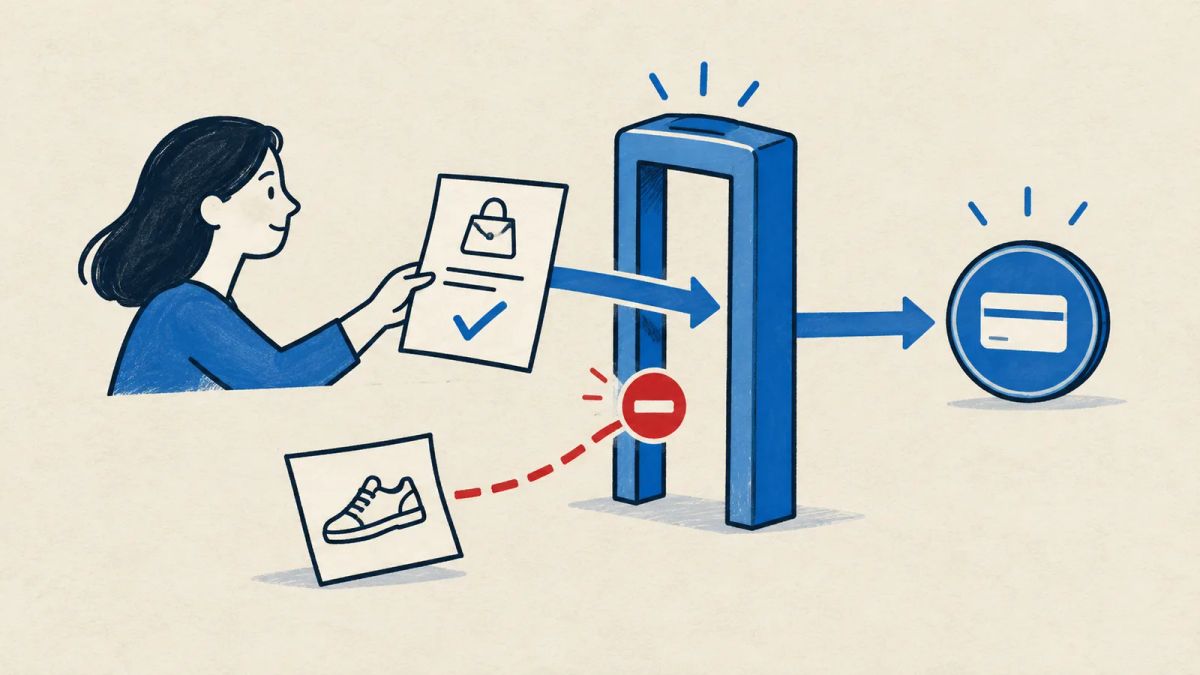
Illustration of approved shopping instructions passing through a blue checkpoint while a shoe purchase is stopped
+ AI News

Amex introduces a framework to stop AI agents making unauthorized purchases

Amex's Intent Intelligence Framework records approved purchase limits before an AI agent pays. Its protection depends on what the customer signs off on.

American Express is introducing a framework designed to stop AI shopping agents from buying outside the instructions their users approved. The Intent Intelligence Framework records a customer’s purchase constraints before payment and connects that approval to the transaction, TechCrunch reports.

Amex says it has yet to see an increase in disputes caused by agentic commerce. It is building the controls ahead of wider adoption, with agents potentially buying household supplies without asking for approval on every order.

What the customer approves

The process begins with a Create Intent API. It captures purchase instructions, including a merchant, a maximum budget and product preferences. The customer then authenticates their identity and approves the intent the agent recorded.

The framework creates an Intent ID and a Proof of Intent Token containing the customer’s high-level constraints. The token obtains a secure digital payment credential for the agent to use at checkout in place of the customer’s actual card number.

Hannah Bozian, Amex’s vice president of agentic partnerships and strategy, gave TechCrunch an example of a customer requesting white Nike sneakers in size 9. If the agent instead requests Adidas shoes, Amex could block the transaction because it conflicts with the approved request.

The same records could help with fraud prevention and disputes. Amex says a log can show what a customer authorized, which agent acted and when.

Adoption and evidence are still open

The framework joins Amex’s Agentic Commerce Experiences developer toolkit, which the company launched in April. Amex is discussing implementation with partners across the payments industry and wants the framework to become an industry standard.

Amex also shared survey results with TechCrunch. In its Trendex survey, 66% of U.S. respondents said they were likely to use AI agents to research the best price, and 61% said they were likely to use them for recommendations over the next 12 months. Those questions measure interest in shopping assistance. They do not establish how many people will authorize agents to spend money.

Sources

The AI Feed Desk

The AI Feed Desk

Editorial desk

The AI Feed Desk tracks AI provider updates, model releases, agent tooling, and enterprise adoption, turning fast-moving announcements into source-linked context for builders and operators.

Noticed a typo, incorrect information, or translation error?

Tell us so we can fix it.

Help Improve This Article

Related Articles

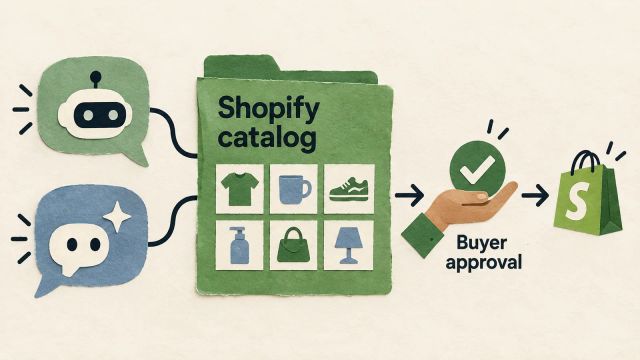
Paper-cut illustration of two AI agents connected to a Shopify catalog, followed by buyer approval and a shopping bag

Shopify opens its catalog to more AI shopping agents

Shopify says more AI agents can access over a billion product listings through Shop. Buyers can set shopping rules and must approve each purchase.

The AI Feed Desk

By The AI Feed Desk

An MCP agent test bench replays clean, faulted, and mitigated tool responses

AgentCheck tests whether MCP agents fail safely

A July 13 paper introduces AgentCheck, an MCP workbench for replaying tool faults and confirming whether agent mitigations actually fix them.

The AI Feed Desk

By The AI Feed Desk

Laptop screen showing four Airbnb homes compared side by side with AI summaries beside a Paris map

Airbnb adds AI search and social features as Chesky calls for an agent operating system

Airbnb adds natural-language search and home comparisons. Chesky's agent vision raises a separate test: preserving the booking tools travelers need.

The AI Feed Desk

By The AI Feed Desk

A closed boundary separates a shopping assistant symbol from a checkout terminal; illustration

Amazon blocks Meta's Muse shopping agent from buying on its site

Amazon says Meta's Muse is an unauthorized AI agent, exposing the access and order-recovery rules that shopping agents need beyond product browsing.

The AI Feed Desk

By The AI Feed Desk

Scatter chart comparing decision index scores and median latency for Clef, Clef-flash, Jev and other decision models

Amazon and Cloudflare release open decision models as the Jev clones multiply

AWS releases Strands Decider 2B. Cloudflare adds Clef and Clef-flash, with open weights and hands-on fine-tuning. Task scores show where speed costs accuracy.

The AI Feed Desk

By The AI Feed Desk